
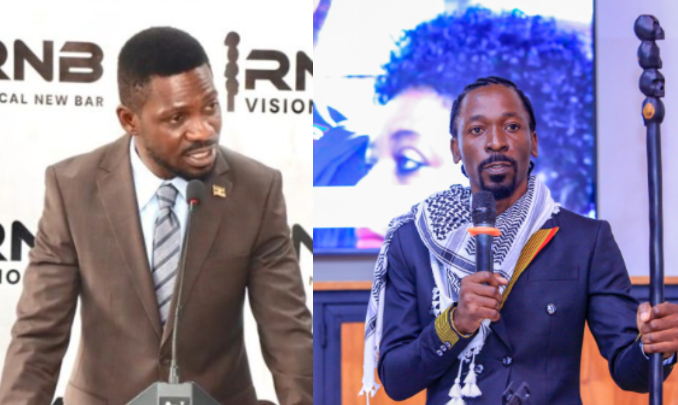


In an unprecedented departure from its long-held stance of political non-alignment, the Uganda Law Society (ULS) has publicly declared support for opposition forces, including National Unity Platform (NUP) presidential flag bearer Robert Kyagulanyi Ssentamu, ahead of the 2026 general elections.
The announcement, contained in an Executive Order issued on Sunday, December 21, 2025, was signed by ULS President Isaac Ssemakadde.
In the statement, Ssemakadde argued that the country has reached a critical juncture where remaining neutral would amount to tacit approval of what he termed the erosion of constitutional governance.
According to the ULS leadership, the decision was driven by deepening concerns over what it describes as the militarisation of civilian life, widespread corruption, and the systematic weakening of independent state institutions under the current National Resistance Movement (NRM) administration. The Society accused security agencies and sections of the judiciary of operating in ways that undermine civil liberties and the rule of law.
Beyond endorsing Kyagulanyi for the presidency, the lawyers’ body also expressed support for Kampala Lord Mayor Erias Lukwago of the People’s Front for Freedom (PFF), as well as other opposition candidates affiliated with NUP and PFF at national and local government levels. ULS described these political actors as the most viable platform for restoring constitutionalism, accountable leadership, and institutional independence.
In the strongly worded directive, Ssemakadde alleged that security forces have increasingly been used to suppress dissent, citing reports of abductions, torture, and the prosecution of civilians in military courts. He further claimed that the judiciary risks losing public confidence if it continues to be perceived as subservient to political and military interests.
Calling for what he labelled a “comprehensive political reset,” the ULS president urged for the removal of military influence from civilian governance, the release of detained political actors, and an end to what he termed politically motivated prosecutions. He said the 2026 elections represent a rare opportunity for Ugandans to reclaim democratic space and restore respect for professional and constitutional norms.
A Turning Point for the Legal Fraternity
Established as a professional body committed to independence and restraint, the Uganda Law Society has traditionally avoided open political endorsements. Observers say this move represents the first time in its history that the Society has formally aligned itself with specific political candidates in a national election.
Legal analysts note that the decision significantly reshapes the relationship between the legal profession and the state, potentially heightening political tensions as the 2026 polls draw closer. Some see it as a signal that parts of Uganda’s institutional leadership are no longer prepared to remain silent amid what they view as democratic backsliding.
From a legal standpoint, experts point out that Ugandan law does not expressly bar the ULS from making political endorsements. The Uganda Law Society Act grants the organisation autonomy to manage its affairs and to act in defence of constitutionalism and the rule of law. While neutrality has been customary, it is not explicitly mandated by statute.
However, analysts caution that the endorsement could still face internal disputes or legal challenges from dissenting members, particularly on grounds that it exceeds the Society’s mandate or infringes on members’ associational rights. Unless successfully challenged in court, though, the Executive Order is widely seen as a legally defensible expression of institutional opinion under extraordinary circumstances.
As Uganda heads toward a highly anticipated electoral cycle, the ULS stance adds a new and potentially influential voice to an already charged political landscape.