
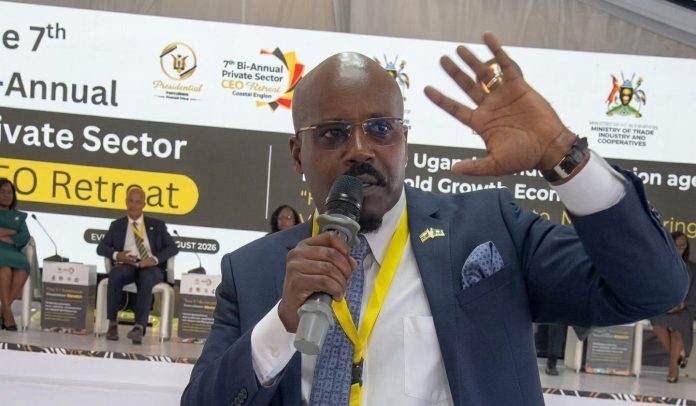


KAMPALA — The East African Business Council Director representing Uganda, Mr Oscar Kamukama, has urged Uganda to look inward to East Africa and the wider African market as it seeks to expand exports and accelerate industrialisation.
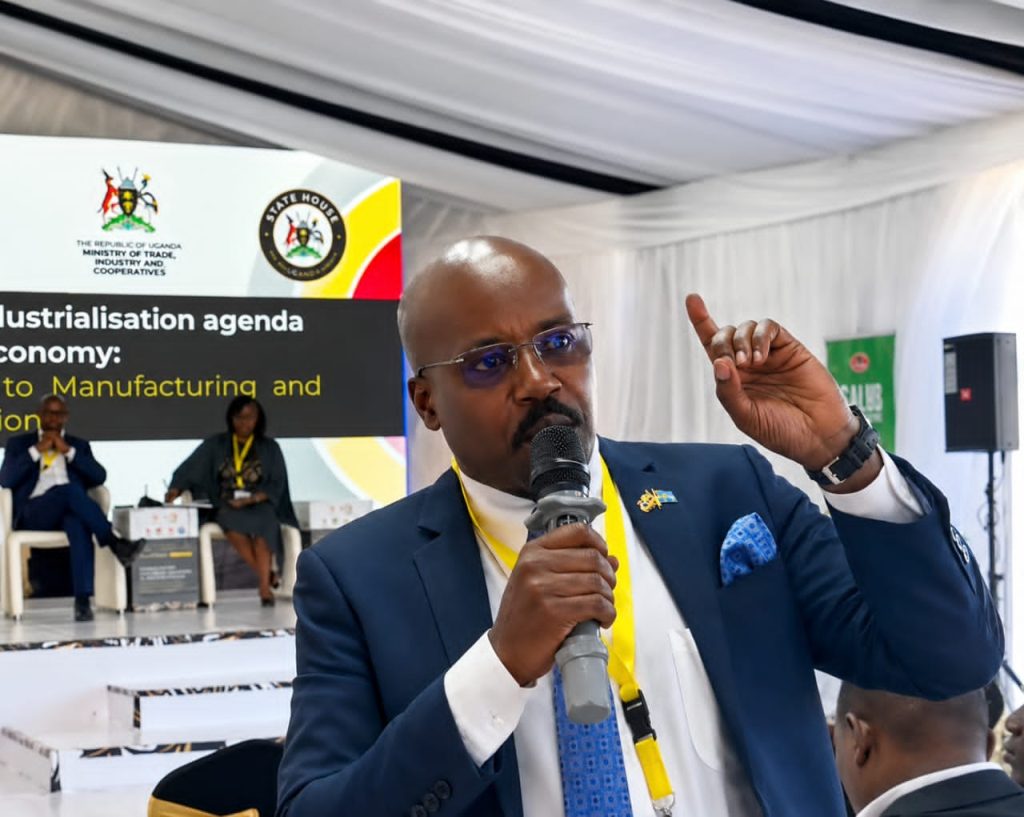
Kamukama made the remarks during a Deep Dive Session at the 7th Bi-Annual Private Sector CEOs Retreat held at the Uganda Wildlife Conservation Education Centre (UWEC) in Entebbe on August 27.
The session, organised by the Office of the Prime Minister, Ministry of Trade, Industry and Cooperatives and the Presidential CEO Forum, focused on “Amplifying Uganda’s Industrial Agenda for a 10-Fold Growth Economy and Celebrating Five Years of Presidential CEO Forum Impact.”
Kamukama said Uganda and other EAC Partner States are sitting on a major market opportunity that remains largely underexploited.
‘LET’S EXPORT INSIDE’
He pointed to the latest EAC trade figures, which show that the Community recorded US$156.7 billion in total trade in 2025, but only US$19.7 billion was traded among EAC Partner States, representing about 12.3 per cent of total trade.
“Before we rush to export outside, let us first export inside. Let us trade amongst ourselves. If we cannot trade amongst ourselves, who is going to trade with us?” Kamukama said.
He argued that stronger intra-EAC trade would give Ugandan manufacturers, farmers and service providers the scale needed to increase production, create jobs and become more competitive in international markets.
“We have the capacity. We have the logistics there. So let’s believe in ourselves. The opportunity is now,” he said.

The EAC currently has more than 331 million people and a combined GDP of approximately US$357 billion, making it one of Africa’s largest integrated markets.
1.4 BILLION AFRICAN MARKET
Beyond East Africa, Kamukama urged Ugandan businesses to position themselves for the African Continental Free Trade Area (AfCFTA), which connects a continental market of approximately 1.4 billion people with a combined GDP of about US$3.4 trillion.
He said Uganda should use the EAC and AfCFTA markets to build industrial scale and value chains instead of viewing Europe and other overseas destinations as the only measure of export success.
“Let’s not first export outside, let’s export inside,” he said.
Kamukama stressed that the strategy should not be viewed as Africa versus Europe, but as a call for Uganda to first maximise opportunities in markets closer to home while continuing to pursue global markets.
REMOVING TRADE BARRIERS
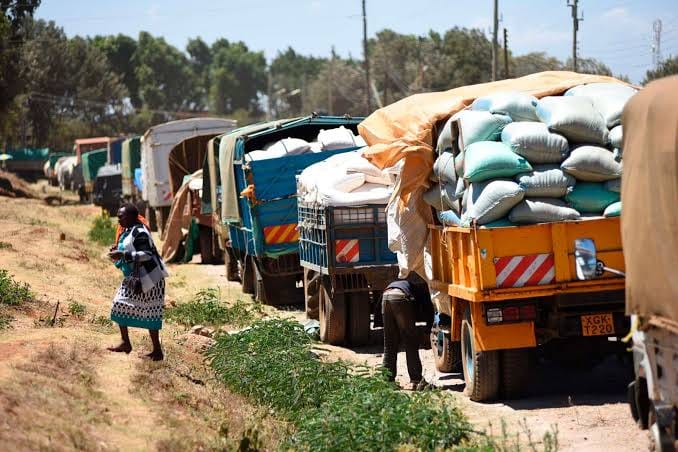
He also called for stronger action to remove barriers that continue to constrain African trade, including non-tariff barriers, regulatory inconsistencies, high logistics costs and border delays.
The EAC has set an ambition of increasing intra-regional trade to 50 per cent by 2030, underscoring the scale of the opportunity that remains untapped.
Kamukama said Uganda’s industrial agenda should therefore be built around producing competitively for East Africa first, Africa next and the rest of the world alongside it.
“The opportunity is now,” he said.