
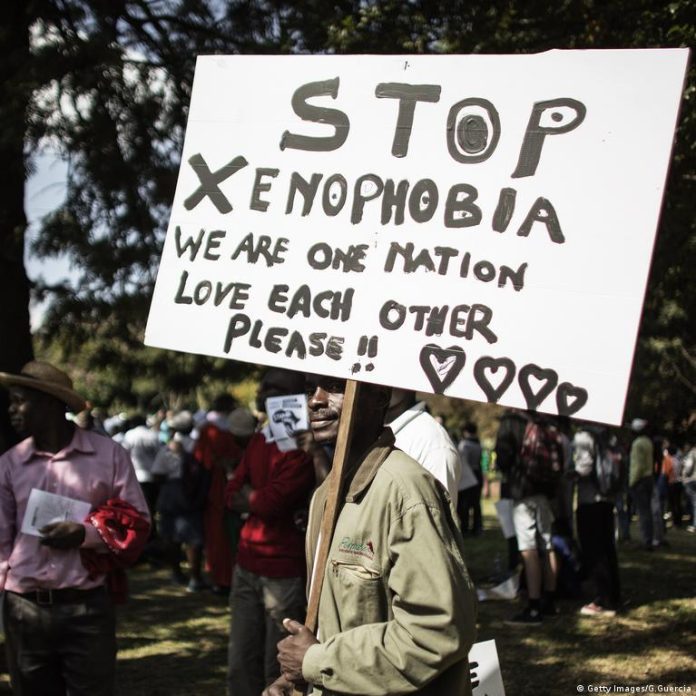



Africa cannot build a prosperous and united continent while political leaders continue to exploit fear of foreigners, immigrants and neighbouring communities for political gain.
Across the continent, some political figures have increasingly resorted to anti-immigrant rhetoric, portraying citizens of other African countries as threats to jobs, security, businesses and national identity.
Such statements may generate applause at political rallies, but they undermine the very foundation upon which a peaceful, integrated and prosperous Africa must be built.
Xenophobia has no place in the Pan-African project.
Africa’s borders were largely drawn during the colonial era, dividing communities that had traded, intermarried, migrated and lived together for generations.
Today, Africans often require passports, visas and immigration permits to cross borders separating communities that historically shared language, culture and economic interests.
We should therefore be extremely careful when political leaders turn these artificial boundaries into instruments for hatred.
Africans should not become strangers to one another
Regional integration is not a luxury. It is an economic and political necessity.
The success of initiatives such as the East African Community, the African Continental Free Trade Area and the broader African Union integration agenda depends on Africans being able to move, trade, invest and work across borders.
Ugandan traders doing business in Kenya, Kenyan professionals working in Uganda, Rwandan businesses operating in Tanzania, Tanzanian workers contributing to the economies of neighbouring countries or South Africans employing people from other African countries should not automatically be viewed as threats.
Migration, when properly managed, can be an economic asset.
The answer to unemployment is not to blame immigrants.
The answer is to create more industries, improve skills, attract investment, expand infrastructure and build economies capable of generating decent jobs for both citizens and lawful migrants.
Political leaders must stop weaponising foreigners
There is a legitimate conversation to be had about illegal immigration, border security, human trafficking, organised crime and pressure on public services.
Governments have every right and indeed a responsibility to enforce immigration laws.
But there is a fundamental difference between enforcing immigration laws and demonising immigrants.
A political leader who tells citizens that foreigners are responsible for virtually every economic or social problem is not offering a serious solution.
Such rhetoric risks turning legitimate public frustrations into hatred against innocent people.
African leaders should understand that today’s political rhetoric can become tomorrow’s violence.
When foreigners are repeatedly portrayed as criminals, economic parasites or enemies of the nation, ordinary citizens can eventually begin to regard them as legitimate targets.
History has shown us how dangerous such rhetoric can become.
Pan-Africanism requires more than speeches
For decades, African leaders have spoken about Pan-Africanism, African unity and the dream of a borderless Africa.
But Pan-Africanism cannot simply be celebrated during independence anniversaries, African Union summits or political conferences.
It must be reflected in how Africans treat one another.
If we genuinely believe that Africa belongs to Africans, then a Nigerian living in Uganda, a Ugandan working in Kenya, a Ghanaian doing business in Tanzania or a Congolese family seeking opportunities elsewhere on the continent should not automatically be treated as an enemy.
African unity must begin with African dignity.
Every African should be able to travel across the continent without being subjected to humiliation, discrimination or political scapegoating simply because of nationality.
Regional integration is Africa’s future
The continent has a population of more than a billion people, enormous natural resources, a young population and tremendous entrepreneurial potential.
Yet African economies remain fragmented.
We need larger markets, stronger infrastructure networks, easier movement of people and goods, harmonised regulations and deeper economic cooperation.
A Ugandan manufacturer should be thinking about selling products to 20 or 30 African markets not merely surviving in one domestic market.
An African student should have opportunities to study anywhere on the continent.
An African professional should be able to take up legitimate employment elsewhere without being treated as an invader.
And African investors should be encouraged to invest across borders.
That is the Africa envisioned by the architects of Pan-Africanism.
Citizens also have a responsibility
Condemning xenophobia does not mean ignoring legitimate concerns raised by citizens.
Governments must ensure that immigration systems are orderly, transparent and fair.
Foreign businesses must obey local laws. Migrant workers must respect host communities. Governments must address criminality regardless of the nationality of the perpetrators.
But responsibility must be individual not collective.
A criminal is a criminal, not a nationality.
One foreigner’s misconduct should never become an excuse for persecuting an entire nationality.
Likewise, economic competition should not automatically be interpreted as an attack on citizens.
African governments should focus on creating an environment in which both citizens and lawful immigrants contribute to economic growth while respecting the laws of their host countries.
Africa needs bridges, not walls
The greatest threat to Africa’s future is not the African who crosses a border in search of opportunity.
It is the politics of division that convinces Africans to fear one another.
Our continent has suffered enough from tribalism, ethnic conflict, civil wars, religious extremism and artificial colonial boundaries.
We should not add xenophobia to that list.
African political leaders have a responsibility to elevate public debate rather than exploit public frustrations.
They should tell citizens the truth about economic challenges and propose practical solutions instead of blaming vulnerable immigrant communities.
The Pan-African dream demands courage.
It demands that we look beyond narrow nationalism and recognise that the prosperity of Uganda is connected to the prosperity of Kenya, Tanzania, Rwanda, South Sudan, the Democratic Republic of Congo and the wider African continent.
Africa cannot integrate economically while remaining divided socially.
Our borders may remain necessary for administration and security, but they should never become barriers to African solidarity.
The continent needs leaders who build bridges, not politicians who manufacture enemies.
Africa’s future lies in integration, cooperation, free movement, shared prosperity and Pan-African solidarity not xenophobia and anti-immigrant politics.
Africa must reject xenophobia. Africa must reject hate. Africa must embrace unity.