
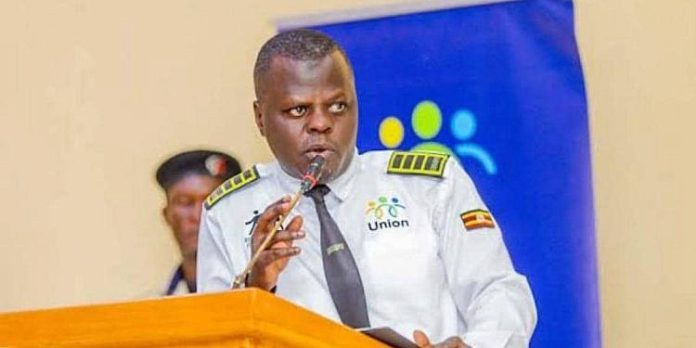


Bus drivers have urged government, transport companies and other road safety stakeholders to involve them more closely in efforts to prevent road crashes, saying those behind the wheel understand risks on the roads better than most.
Umar Kakaire, National Chairman of Uganda Bus Drivers, said drivers should be considered key partners in the development and implementation of road safety policies because they experience the challenges of the roads every day.
“Anything meant for us without us can’t be for us,” Kakaire said.
He was speaking during the launch of Liberty General Insurance Uganda’s SMART Journeys Project, an initiative aimed at helping transport operators move from responding to crashes to identifying and preventing risks before accidents happen.
Kakaire said drivers can provide important information that may not always be available to employers, regulators or police, particularly when it comes to the health, behaviour and preparedness of fellow drivers.
He warned that having a driving licence and the required badges does not necessarily mean someone is capable of safely driving a bus.
“You employ because you have seen someone with a driving licence or with a badge. But not everyone who has a badge and a driving licence is a driver or is a good driver,” he said.
According to Kakaire, drivers often know colleagues who may have health or other personal challenges that could affect their ability to drive safely.
“Others can’t even drive a bus up to the wheel, but they have those qualifications. And you have disqualified good drivers, but for us we know them because we are always with them,” he said.
He called on bus companies to involve drivers’ organisations in recruitment, vetting and monitoring systems to ensure that only competent and fit drivers are put behind the wheel.
Kakaire also raised concerns about the welfare of drivers and called for stronger enforcement of workers’ compensation schemes.
He said some drivers have died in the course of their work, while others have suffered permanent disabilities, leaving families struggling without adequate support.
“What happened to the workers’ compensation? Because we have very many of our colleagues that have died, they have left orphans, they have left widows. Others are in wheelchairs, but the families are suffering,” he said.
He further asked government agencies to formally recognise the Uganda Bus Drivers’ organisation, saying drivers want to support government road safety programmes rather than compete with authorities.
“We want to give support to your programmes, not fighting you. We don’t want to take your responsibilities. We know our lines and our limits,” Kakaire said.
Police push prevention
SP Michael Kananura, Community Liaison Officer for Traffic and Road Safety, said drivers and transport companies have a major responsibility in preventing crashes.
He said the role of traffic police should go beyond arresting motorists after accidents and instead focus on stopping dangerous behaviour before it results in loss of life.
“As traffic police, our concern is not to simply apprehend drivers after these crashes have occurred, but our greater objective is to prevent crashes before they can occur, and then we save lives,” Kananura said.
He identified fatigue, speeding, dangerous overtaking and unroadworthy vehicles as some of the leading risks on Uganda’s roads.
Fatigue, he noted, can be particularly difficult for traffic officers to identify because drivers and their employers are often in a better position to know when someone has driven for too long and needs rest.
“No traffic officer will stop and say, ‘Please, you are tired, rest.’ No one,” he said.
Kananura therefore called on transport companies to improve journey planning and make sure drivers have enough time to rest during long-distance trips.
Drivers to be tracked
Apollo Kashanku, Assistant Commissioner for Transport Regulation and Safety at the Ministry of Works and Transport, said government is working on systems designed to make drivers more accountable for their conduct on the road.
He said a demerit system is being introduced, under which traffic offences will be recorded against individual driving licences.
“Every corner you negotiate badly, it will go on record on your driving licence. Every small incident will go on record,” Kashanku said.
He said the system will also give transport companies an opportunity to identify drivers with repeated violations and reward those who maintain good safety records.
Kashanku encouraged insurance companies and financial institutions to consider the road safety records of both drivers and transport companies when making decisions on insurance and financing.
Insurer warns of rising risks
Paul Kavuma, Acting Managing Director and Country Head of Operations at Liberty General Insurance Uganda, said the frequency of crashes is increasing the difficulty and cost of insuring commercial transport.
“Your risks are becoming uninsurable. Not for anything else, but because of the repeated road damage,” Kavuma said.
Through the SMART Journeys Project, Liberty plans to promote measures including defensive-driver training, regular vehicle maintenance, journey planning, speed monitoring, fleet safety and better reporting of road incidents.
Kavuma said the insurer is also prepared to offer free defensive-driving training to bus operators as part of efforts to reduce crashes and the financial losses associated with them.
The initiative brings together government, police, insurers, transport operators, financiers and regulators, with stakeholders calling for closer cooperation and greater use of technology to identify dangerous driving behaviour before it leads to crashes.
“Road crashes are preventable and controllable. Speeding, phone use while driving and drink driving are choices we can change,” he said.
The call for stronger prevention comes as Uganda continues to record a high number of road crashes. The Uganda Police Annual Crime Report 2025 recorded 26,044 road crashes, including 4,602 fatal crashes.