
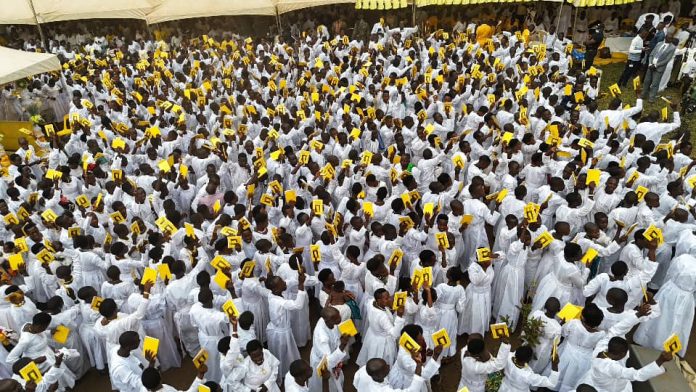


Omukama Ruhanga Owobusobozi Bisaka, the founder and leader of the Faith of Unity, has called on Ugandans to prioritise unity, peaceful coexistence and local economic development, arguing that social harmony is a prerequisite for sustainable transformation.
Bisaka made the remarks during a two-day Faith of Unity gathering held at Kikanda Village in Nkaruguza Town Council, Kibaale District, which drew thousands of believers and residents from the wider Bunyoro sub-region.
The event marked a major milestone for the faith, with 1,145 new staff members, locally known as Bahereeza, inaugurated and 238 new converts received from various religious backgrounds.
Addressing believers at Mugalama Bukwenda Diocese—an area historically associated with witchcraft practices—Bisaka underscored the need for unity across religious, ethnic and community lines.
He urged followers to reject divisions and instead work collectively to establish small-scale industries as a pathway to local development and improved household incomes.
Bisaka also acknowledged the role of President Yoweri Kaguta Museveni in fostering peace, security and freedom of worship, which he said have enabled the growth of the Faith of Unity across the country.
He noted that government interventions in the late 1980s and 1990s helped counter misinformation that had previously targeted the faith, allowing it to operate openly.
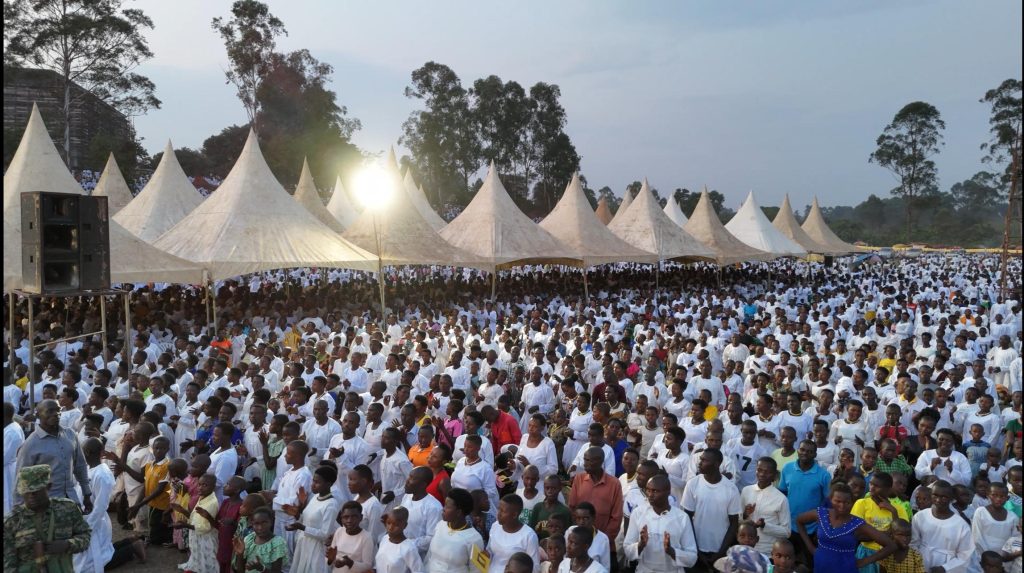
He reiterated the Faith of Unity’s support for President Museveni and the ruling National Resistance Movement (NRM), calling on believers to participate in the January 15, 2026 polls by voting for the NRM chairperson and party candidates as a gesture of appreciation for what he described as consistent government goodwill towards the faith.
The function was attended by the Minister of Finance, Planning and Economic Development, Mr Matia Kasaija, who delivered a tractor donated by President Museveni to support agricultural production among Faith of Unity followers. Mr Kasaija commended Bisaka for promoting unity and civic mobilisation, noting that such efforts have contributed to increased public support for government programmes.
Following the Kibaale engagements, Bisaka is expected to continue his outreach in Hoima City, an area traditionally regarded as an opposition stronghold, as part of his broader, year-round mobilisation drive centred on unity, development and national cohesion.