
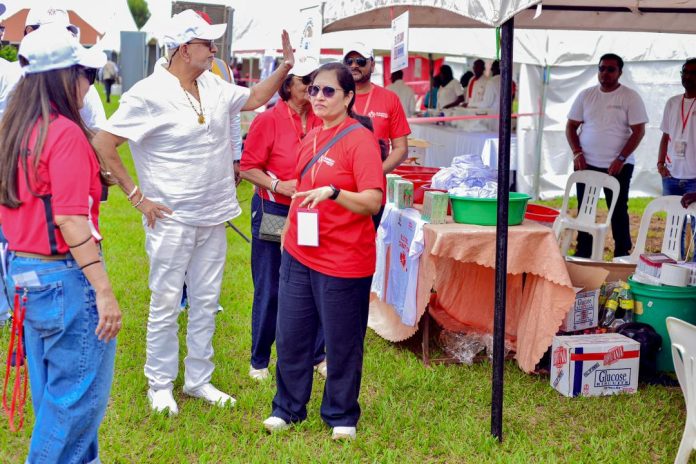


As thousands of patients stream into Bukedea Teaching Hospital for the Rajiv Ruparelia (RR) Memorial Eye Camp, the scale of the intervention is doing more than restoring sight,it is redefining how large-scale healthcare outreach can be delivered in Uganda.
Behind the life-changing surgeries, screenings, and distribution of spectacles lies a carefully coordinated effort driven by the Ruparelia Foundation and an extensive network of partners. Together, they are demonstrating that tackling Uganda’s growing eye health burden requires more than goodwill,it demands structure, investment, and collaboration.
Unlike traditional medical camps that operate in isolation, the Bukedea initiative brings together a coalition of public institutions, private companies, medical experts, and community leaders.
Facilities such as Mulago National Referral Hospital and C-Care have provided critical medical expertise, while Bukedea Teaching Hospital has served as the operational hub. At the same time, corporate partners from pharmaceutical firms to manufacturing companies have contributed resources that make the entire outreach possible.
This multi-sector approach is not accidental.
It reflects a deliberate strategy to pool strengths: government-linked leadership for mobilisation, private sector efficiency for execution, and medical institutions for technical excellence.The result is a high-impact intervention capable of reaching thousands within days something few standalone efforts could achieve.
While the camp is expected to screen over 2,000 patients and perform hundreds of surgeries, its deeper significance lies in what it reveals about Uganda’s healthcare system.
Eye care remains one of the most underserved areas, with limited specialists and services concentrated in urban centers.
For rural populations, access often depends on long-distance travel and high out-of-pocket costs.
By bringing services directly to Bukedea, the outreach effectively reverses this dynamic taking healthcare to the people rather than expecting patients to navigate costly and complex systems.
This approach not only increases access but also reduces delays in treatment, which are often the difference between reversible and permanent blindness.
The Bukedea Eye Camp is designed to deliver results, not just diagnoses.Patients are screened, treated, and, where necessary, operated on within the same setting. This full-cycle model ensures that individuals do not fall through the cracks,a common challenge in many outreach programs where follow-up care is limited.
The inclusion of pediatric eye care further strengthens the impact. By addressing vision problems in children early, the initiative is safeguarding educational outcomes and long-term development.
For adults and the elderly, restored vision translates directly into renewed productivity and independence outcomes that extend beyond health into economic and social well-being.
The decision to focus on Bukedea and the wider Teso sub-region reflects both immediate need and strategic intent.communities in this region face significant barriers to specialized care, including limited infrastructure and high treatment costs. For many, conditions like cataracts remain untreated not because they are incurable, but because they are unaffordable.
The eye camp, therefore, serves as both an intervention and a statement: that access to essential healthcare should not depend on geography or income.From Philanthropy to Systems Thinking.At its core, the Bukedea initiative represents a shift in how philanthropy is applied to public health challenges.
Rather than short-term relief, the focus is on high-impact delivery, knowledge transfer, and partnership-building. Medical students are gaining practical experience, healthcare workers are collaborating across institutions, and communities are being engaged directly.
This creates a ripple effect strengthening not only immediate outcomes but also future capacity within the health system.
As Uganda continues to grapple with preventable blindness and limited access to care, the Bukedea model offers important lessons.
Well-funded, partnership-driven outreaches can serve as effective stopgaps, but more importantly, they can inform long-term strategies for expanding access nationwide.
The question going forward is not whether such interventions work the evidence is already visible in Bukedea but how their principles can be scaled and integrated into broader health policy.
While the Rajiv Ruparelia Memorial Eye Camp is rooted in remembrance, its impact extends far beyond tribute.
It is restoring sight to thousands, strengthening partnerships across sectors, and spotlighting a critical gap in Uganda’s healthcare system.
In doing so, it offers a glimpse of what is possible when investment, coordination, and purpose align not just to treat patients, but to transform lives.