
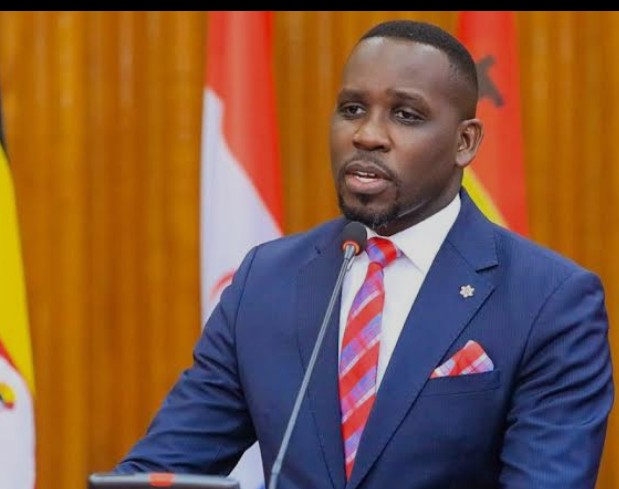


Leader of the Opposition in Parliament Joel Ssenyonyi could face a major political challenge following the gazetting of a proposed law seeking to change how the head of the opposition is elected, supervised and removed from office.
The Administration of Parliament (Amendment) Bill, 2026, sponsored by Buyaga West County MP Dennis Namara, has been published in the Uganda Gazette, opening the way for its consideration by Parliament.
The proposed legislation appears in Bill No. 15 of the Uganda Gazette, Volume CXIX, No. 95, dated October 23, 2026.
If enacted, the Bill would fundamentally change the process of choosing the Leader of the Opposition (LoP), transferring the responsibility from the largest opposition party to all opposition Members of Parliament.
The proposal also introduces new requirements for appointing the Shadow Cabinet, broadens consultations on opposition leadership appointments and establishes additional grounds for removing the LoP.
The development comes amid political exchanges involving Ssenyonyi, Chief of Defence Forces Gen Muhoozi Kainerugaba and the Patriotic League of Uganda (PLU), which has publicly supported changes to the law governing the opposition leadership.
Under the existing legal framework, the opposition party with the highest number of representatives in Parliament selects the Leader of the Opposition.
However, Namara argues that this arrangement concentrates power in one political party, despite the LoP being expected to represent opposition interests across the House.
The proposed amendments would allow all opposition MPs, including independent legislators, to participate in electing the officeholder.
Namara secured Parliament’s permission to introduce the Private Member’s Bill on July 8, 2026, following a plenary debate presided over by Deputy Speaker Thomas Tayebwa.
During the debate, the legislator argued that the existing arrangement restricts the participation of opposition MPs who do not belong to the largest opposition party.
He maintained that a broader electoral process would give more opposition representatives a voice in determining who leads them in scrutinising government policies and holding the Executive accountable.
The proposed changes would also require the Leader of the Opposition to consult opposition parties, political organisations and independent legislators when making appointments to parliamentary leadership positions.
Another significant provision concerns the composition of the Shadow Cabinet, which mirrors government ministries and provides alternative policy positions on behalf of the opposition.
Currently, the LoP appoints members of the Shadow Cabinet in consultation with party leadership.
Namara’s Bill proposes that the appointments be subjected to approval by opposition MPs through a parliamentary resolution.
If adopted, the provision would introduce a collective approval mechanism into the formation of the opposition’s alternative government team.
The legislation also proposes additional grounds for removing the LoP, including misconduct, incompetence and physical or mental infirmity that prevents the officeholder from performing official responsibilities.
Under the proposed transitional arrangements, the incumbent would leave office three months after the law comes into force, paving the way for an election under the new system.
These provisions could significantly alter the balance of power within the opposition and the authority exercised by the person occupying the office.
The proposed legislation comes against the backdrop of public disagreements between Ssenyonyi and Gen Muhoozi Kainerugaba, who commands the Uganda People’s Defence Forces and leads the Patriotic League of Uganda.
Muhoozi has called for Ssenyonyi’s removal in posts on X and subsequently directed PLU-affiliated legislators to explore ways of unseating him.
The PLU has since endorsed the proposed amendments, presenting them as an opportunity to establish a clearer legal framework for selecting and removing the Leader of the Opposition.
Kasambya County MP David Kabanda, who heads the Office of the PLU Chairman, announced the organisation’s support for the initiative on behalf of Muhoozi.
The political developments have placed renewed attention on the legal provisions governing the opposition leadership, although the gazetting of the Bill does not automatically remove Ssenyonyi from office.
For the proposed changes to take effect, Parliament must consider and pass the legislation in accordance with the applicable legislative procedures.
What the Current Law Provides
The proposed amendments seek to revise the Administration of Parliament Act, 1997.
Section 8 of the existing law provides for the opposition party with the greatest numerical strength in Parliament to elect the LoP.
Although the party may consult other opposition parties and independent MPs, the consultations are not compulsory.
Section 9 outlines circumstances under which the officeholder ceases to hold the position, including removal by the party that elected them, resignation, departure from that party, loss of parliamentary membership under Article 83 of the Constitution, or the party losing its status as the largest opposition party.
Article 82A of the Constitution requires Parliament to establish a legal framework governing the selection and removal of the Leader of the Opposition, the functions and status of the office, and its associated privileges and benefits.
The LoP plays a central role in scrutinising government programmes, coordinating opposition positions and presenting alternative policies.
Namara’s proposal follows earlier attempts to reform the legal framework governing opposition leadership.
In 2018 and 2019, independent Kabale Municipality MP Andrew Aja Baryayanga pursued an initiative aimed at broadening participation in selecting opposition leaders.
In 2024, Mityana County MP Richard Kizito Lumu revived the debate by introducing another Administration of Parliament (Amendment) Bill.
Lumu’s proposal sought to empower all opposition MPs to elect both the Leader of the Opposition and the Opposition Chief Whip.
It also proposed the creation of a Deputy Leader of the Opposition, changes to the selection of party whips, greater representation of independent MPs on the Parliamentary Commission and parliamentary approval of the Shadow Cabinet.
Parliament granted Lumu permission to introduce the Bill on August 29, 2024, before he formally tabled it on October 1 of the same year.
However, the proposal encountered opposition from political organisations, including the Forum for Democratic Change (FDC), the Uganda People’s Congress (UPC) and the Alliance for National Transformation (ANT).
Their leaders raised concerns that transferring the selection of the LoP to all opposition MPs could weaken political parties’ autonomy and undermine unity within the opposition.
According to parliamentary tracking records cited in the report, Lumu’s Bill was withdrawn in March 2026.
Another legislative initiative was introduced by Kilak North MP Anthony Akol of the ruling National Resistance Movement in 2021. That proposal focused mainly on parliamentary administration and the composition of the Parliamentary Commission, rather than the broader changes to opposition leadership sought by Namara and Lumu.
Parliament Yet to Make a Final Decision
The gazetting of Namara’s Bill represents a further step in the legislative process but does not mean the proposed amendments have been approved.
The legislation must still undergo the applicable parliamentary procedures before any changes can become law.
If passed in its current form, the Bill would change how the opposition selects its parliamentary leader, approves the Shadow Cabinet and determines the circumstances under which the officeholder can be removed.
For Ssenyonyi, the proposal introduces the prospect of a different electoral process in which his position would depend on a broader vote among opposition MPs rather than the decision of the largest opposition party alone.
However, until Parliament passes the Bill and the resulting law takes effect, the existing legal framework governing the Leader of the Opposition remains in place.