
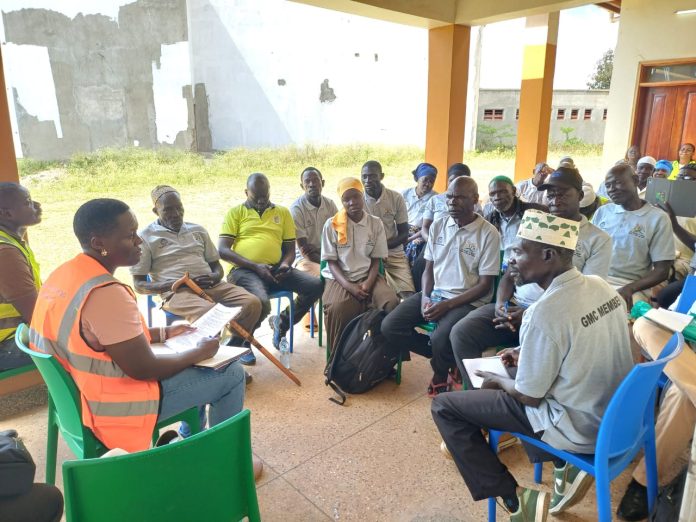


The Ministry of Works and Transport (MoWT), the World Bank and the Koboko-Yumbe- Moyo Road Corridor Project team have engaged district leaders and Grievance Management Committee (GMC) representatives from Koboko, Yumbe and Moyo districts, alongside development partners, to strengthen the prevention of and response to gender-based violence (GBV) in communities along the road corridor.
Participating partners included the Office of the Prime Minister (OPM), the United Nations High Commissioner for Refugees (UNHCR), the Danish Refugee Council (DRC) and the Adventist Development and Relief Agency (ADRA).
The engagements took place from October 12 to 15, 2026, at the respective district offices in Koboko, Yumbe and Moyo during the World Bank Implementation Support Mission.
The discussions focused on community grievance-handling mechanisms and the prevention of and response to GBV, sexual exploitation and abuse (SEA), sexual harassment (SH), and violence against children.
They also addressed reporting procedures and the referral of concerns to appropriate service providers.
Presentations by Nakasango Mariam from OPM, Winfred Mandeku, a GBV Protection Officer at DRC, and Roy Alioni from UNHCR highlighted protection challenges in refugee-hosting communities.
These included risks associated with road construction and poverty, limited resources, gaps in referral pathways, and fear and stigma that discourage survivors from reporting incidents.
The presentations emphasised the need for stronger coordination among government agencies, humanitarian partners and community structures, alongside safe and confidential reporting channels, timely referrals and adequate resources to sustain protection services for both refugee and host communities.
District representatives responsible for community development and GBV prevention and response also made presentations, highlighting local protection challenges and the role of district structures in raising community awareness, reporting incidents and referring GBV cases to appropriate service providers.
District leaders and GMC representatives participated in discussions on community grievance-handling mechanisms and the importance of linking survivors to appropriate support services.
Michael Mahat, the World Bank’s Senior Social Development Specialist, emphasised that a zero-tolerance approach to GBV requires accountability and appropriate action whenever incidents occur.
He noted that although road development brings significant benefits, construction activities can also create social risks that must be identified and managed by the government, contractors and other implementing parties.
Ivan Mwondah, the World Bank Task Team Leader, highlighted the importance of collaboration among government institutions, development partners, communities and the project team in strengthening GBV prevention and response.
He also emphasised the need to ensure that support mechanisms remain effective beyond the project’s completion.
Maurice Olupot, the Project Consultant responsible for GBV and related safeguards, underscored the importance of continuous risk assessments, community sensitisation and coordination among the contractor, resident engineer and service providers.
He also highlighted existing project grievance-reporting structures, including school-based arrangements.
The project’s Contract Manager, Eng. Alex Otim, emphasised the need for cooperation among district leaders, GMCs and communities in addressing project-related concerns and implementing social safeguards.
Key areas identified for strengthening GBV prevention and response included raising awareness of reporting channels, improving grievance-handling and referral mechanisms, sensitising communities and workers, reinforcing accountability, and enhancing coordination among project stakeholders and service providers.
The 103.08-kilometre Koboko-Yumbe-Moyo Road Corridor Project is being implemented by the Government of Uganda through MoWT, with funding from the World Bank.
The project aims to improve connectivity, access to essential services and economic opportunities while ensuring that potential social risks are identified and appropriately managed.
The engagements form part of ongoing efforts to ensure that road infrastructure development benefits communities while protecting vulnerable people from violence, exploitation and abuse.