


Kampala — The Electricity Regulatory Authority (ERA) has reported notable progress in electricity affordability, sector reforms and system expansion in 2025, while acknowledging persistent reliability challenges that affected households and businesses during the year.
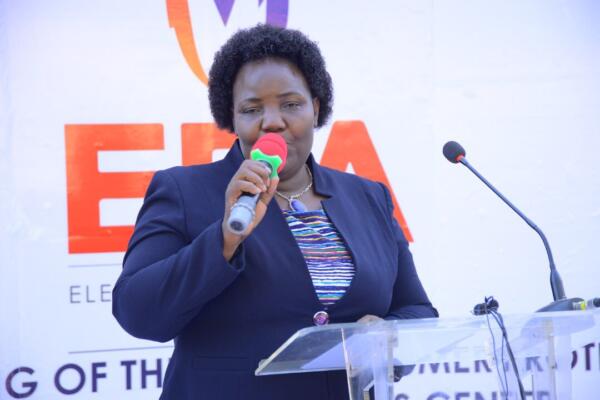
In an end-of-year message, ERA Chief Executive Officer Eng Ziria Tibalwa Waako said the Authority had focused on easing the cost of electricity, strengthening regulatory oversight and guiding a major transition in the distribution sub-sector, even as it stepped up efforts to address power interruptions and network performance challenges.
Eng Tibalwa said the weighted average end-user electricity tariff declined from Shs459.8 per unit in the first quarter of 2025 to Shs395.8 by year-end, attributing the reduction to lower system costs, favourable macro-economic conditions, increased power dispatch from the Karuma Hydropower Project and revised investment parameters for the Uganda Electricity Distribution Company Limited (UEDCL).
She said ERA maintained several pro-consumer measures, including a lifeline tariff of Shs250 per unit for the first 15 units of monthly consumption, a domestic cooking tariff of Shs412 per unit and the declining block tariff structure. The Authority also introduced consumer re-categorisation measures, creating a special tariff for public amenities such as health centres, referral hospitals and street lighting, set at Shs360 per unit.
According to the regulator, industrial consumers were also reclassified to distinguish between manufacturing and non-manufacturing activities, resulting in new tariff categories for medium, large and extra-large manufacturers, as well as service-oriented enterprises. An institutional cooking tariff of Shs360 per unit was introduced to support large institutions shifting to clean cooking solutions.
“These interventions are aimed at easing household energy costs, promoting productive use of electricity, strengthening industrial competitiveness and supporting economic growth,” Eng Tibalwa said, while noting that affordability must be matched with reliability.
She acknowledged that many consumers experienced power interruptions, voltage fluctuations and delayed restoration during the year, particularly during the transition following the end of Umeme Limited’s electricity distribution concession.
2025 marked a major turning point for the electricity distribution sub-sector, with UEDCL taking over operations after the expiry of Umeme’s concession. ERA said it played a central role in managing the transition through asset verification, compliance assessments and coordination with government agencies to ensure service continuity and safeguard the public interest.
Eng Tibalwa said ERA had since intensified regulatory oversight, directed corrective measures and approved targeted investments to stabilise and strengthen the distribution network. “Restoring a stable, consistent and reliable electricity supply day and night remains our top priority,” she said.
On sector growth, ERA reported that Uganda’s installed electricity generation capacity had risen to 2,098 megawatts, supported by 5,383 kilometres of transmission lines and nearly 80,000 kilometres of distribution infrastructure. Grid connections increased to 2.52 million customers in 2025, reflecting progress towards national electrification targets.
The Authority said the sector continues to benefit from a strong pipeline of new generation projects, with 28 projects at feasibility stage and 31 licensed projects, with a combined capacity of 324.6 megawatts, under development across hydropower, solar, biomass, cogeneration, wind and gas-to-power technologies.
About 65 megawatts is expected to be added to the national grid by the end of 2026.
ERA also highlighted efforts to diversify the energy mix and strengthen energy security through geothermal, nuclear, biomass and waste-to-energy initiatives. In line with the National Energy Policy 2023, Uganda aims to develop 24,000 megawatts of nuclear power by 2040, while its geothermal potential is estimated at 1,500 megawatts.
At the institutional level, ERA expanded its regional presence with the opening of a regional office in Mbarara, bringing its total to three, in a move aimed at strengthening consumer protection and regulatory enforcement at the local level.
The Authority also raised Uganda’s profile on the continental energy stage by hosting the inaugural Africa Electricity Symposium in 2025 and launching the Youth Energy Summit, targeting young professionals in the energy sector.
Regionally, Uganda made progress towards electricity trade and integration after the Eastern African Power Pool Council of Ministers approved market rules for commercial power trading in April 2025. The same meeting inaugurated the Secretariat of the Independent Regulatory Board in Kampala, which is now developing harmonised regulatory and market surveillance frameworks.
On efficiency, ERA reported distribution losses of 17.1 percent and transmission losses of 4 percent, saying it continues to work with licensees to reduce losses through targeted investments and operational reforms.
The regulator said it had also licensed three companies to undertake key transmission infrastructure projects following amendments to the Electricity Act, while continuing to oversee the Electricity Scale-Up Project aimed at delivering 300,000 new connections annually.
Eng Tibalwa said safety and professionalism remain central to ERA’s mandate, noting that Uganda now has 4,798 certified electricians responsible for safe electrical installations nationwide.
She also reported progress in consumer protection and enforcement, including support for investigations that led to 11 convictions related to vandalism of electricity infrastructure in 2025, warning that vandalism undermines reliability and public safety.
Looking ahead, ERA will implement its 2025–2030 Strategic Plan, aligned with the National Development Plan and Vision 2040, with a focus on scaling generation, achieving competitive industrial tariffs and accelerating universal access to electricity.
Eng Tibalwa concluded by reaffirming ERA’s commitment to improving efficiency, reliability and quality of service across the electricity supply industry, while advancing the energy transition to secure a sustainable power sector for Uganda.