

Microhaem Scientifics (MHS), the first local IVD manufacturer in Uganda and Sub Shara Africa, pioneered this initiative, which is expected to reduce Ugandans’ reliance on imported kits, significantly lower testing costs and create job opportunities in the Region.
President Yoweri Museveni commissioned the plant in Kampala on November 28th, 2023, lauding young Ugandan scientists for breaking free from what he termed the “slavery of dependency.””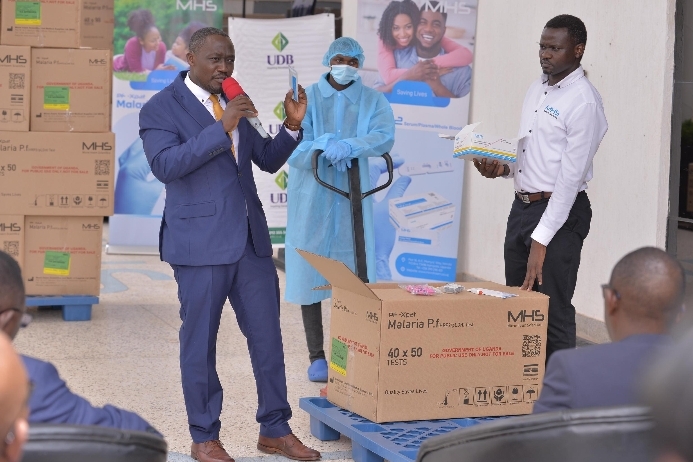
He emphasized the importance of self-reliance in Africa’s healthcare sector, citing the continent’s growing population as a key market for locally made products.
“I want to salute you young people for waking up and getting out of the slavery of dependency,” Museveni said. “The market is part of the business. Anyone who manufactures but can not sell is not in business. In the next 30 years, Africa’s population will be 2.5 billion.”
Affordable testing for all
As noted by Dr. Cedric Akwesigye, Managing Director of MHS, the new diagnostic tests manufactured by MHS are a complete package and a replica of a laboratory, eliminating the need for healthcare providers to buy different testing accessories as is currently on the market. Each kit will cost less than $1, significantly lower than imported alternatives that retail for around $1.5 and above.
“The test kits People can now test themselves conveniently without requiring a healthcare provider,” Dr. Akwesigye noted during the flag-off event yesterday.
MHS has current capacity to produce 85 million testing kits annually and the Uganda government, through the National Medical Stores (NMS), has placed an initial order for four million test kits, covering 30% of Uganda’s annual demand.
Dr. Daniel Kyabayinze, Director of Public Health at the Ministry of Health, expressed concerns about counterfeit kits infiltrating the market, warning that inaccurate results could endanger lives.
“There are fake kits that wrongly diagnose people, putting lives at risk. We must ensure only high-quality, verified diagnostic tools are available,” Dr. Kyabayinze cautioned.
Uganda receives $350 million in funding from the Global Fund every three years, with a significant portion allocated to medicines and diagnostics.
However, the country’s demand for diagnostics in the public health sector alone is estimated at $200 million per year, while available funding covers only $117 million, leaving an annual gap of approximately $83 million.
Dr. Kyabayinze highlighted that between 12 to 14 million people are tested for various diseases annually in Uganda, with nearly half of the population undergoing malaria tests each year.
As such, he said the availability of locally manufactured test kits will help lower costs, as private health facilities currently charge about UGX 5,000 per malaria test.
Dr. David Nahamya, the Executive Director of the National Drug Authority (NDA), hailed the project as a historic achievement for Uganda and the region.
“This is Uganda’s first facility of its kind, and in the region”. “The WHO has commended the quality of our kits,” Nahamya said.
“This is the first plant in East Africa to locally manufacture diagnostic kits, and it meets all quality standards both locally and internationally.”
Uganda Development Bank (UDB) has provided $7.5 million in funding to support the project, with Managing Director Patricia Ojangole emphasizing the importance of long-term investment in local manufacturing.
“This milestone is a testament to Uganda’s remarkable potential in healthcare manufacturing. We are committed to supporting enterprises that enhance our health system,” she stated.
Equity Bank has also pledged continued financial backing. “We started this partnership six months ago to support the manufacturing sector. We commend the work done so far and commit to supporting MHS to close the funding gaps.