


The Inspectorate of Government (IGG) has directed the Ministry of Works and Transport to interdict Engineer Isaac Wani, Commissioner for National Roads, as investigations continue into the sharp increase in the cost of the Busega–Mpigi Expressway project.
The directive requires Permanent Secretary Alex Waiswa Bageya to immediately suspend Wani from his duties to allow investigators to conduct further inquiries into his alleged involvement in decisions that contributed to the project’s escalating costs.
Wani previously served as Director of Network Planning and Engineering at the now-defunct Uganda National Roads Authority (UNRA), when key decisions concerning the expressway’s design and implementation were made.
The IGG has also instructed Bageya to put temporary administrative arrangements in place to ensure that the National Roads Commissioner’s responsibilities continue to be handled during the interdiction.
In a separate development, the Inspectorate has cleared Bageya of wrongdoing in the project’s cost escalation, stating that he was not involved in the earlier decisions that led to the increase.
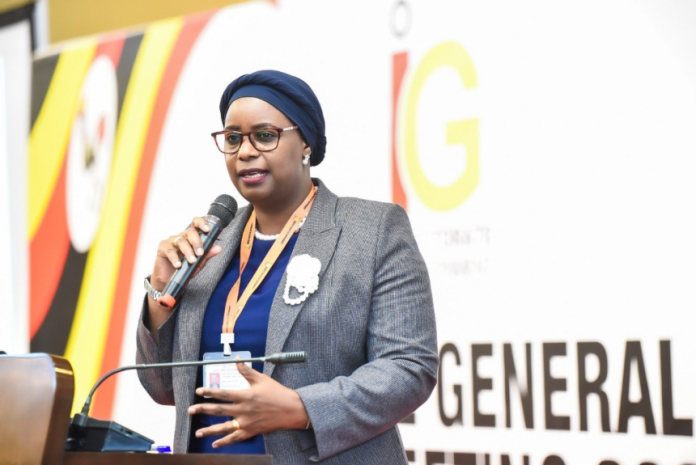
In a statement issued on October 23, 2026, Inspector General of Government Lady Justice Naluzze Aisha Batala said the investigations had established that the Permanent Secretary was not responsible for the decisions under scrutiny.
The IGG consequently directed the Head of Public Service and Secretary to Cabinet, Ruth Nakyobe Mbonye, to allow Bageya to resume his duties.
The latest developments mark a significant turn in the investigation, shifting attention towards decisions made during the project’s earlier stages under the former UNRA management structure.
The Busega–Mpigi Expressway is a 23.7-kilometre, four-lane highway intended to reduce traffic congestion along the Kampala–Masaka road and improve transport links between Kampala and western Uganda.
The project features bridges, interchanges, drainage infrastructure, access roads and tolling facilities.
However, the road has attracted considerable public scrutiny following a dramatic increase in its estimated construction cost.
According to the Auditor General, UNRA awarded a construction contract valued at approximately Shs547.543 billion on June 18, 2019, before detailed engineering designs and dependable cost estimates had been adequately completed.
By March 2023, the projected cost had climbed to approximately Shs1.35 trillion.
The Auditor General attributed much of the increase to inadequate design preparation before the construction contract was signed, raising questions about the planning and procurement processes that preceded implementation.
Works and Transport Minister Fred Byamukama has subsequently indicated that the overall expenditure could approach Shs2 trillion when related infrastructure is included.
The expressway itself is estimated to cost about Shs1.3 trillion, while the proposed Busega Systems Interchange could require a further Shs700 billion.
The Ministry of Works and Transport has previously explained that changes to the original designs and project scope, including realignment and the introduction of additional interchanges, contributed to the rising costs.
Funding Shortages and Delays
Construction of the expressway began in 2020 but has experienced repeated delays caused by financing constraints, compensation disputes, design changes and outstanding payments to the contractor.
The project was initially expected to be completed in 2023, but that deadline was missed.
In its report for the financial year ending June 2024, the Auditor General revealed that funding allocated for civil works had been exhausted by May of that year, despite physical progress standing at only 40.86 per cent.
The report further established that certified works worth approximately Shs30.8 billion remained unpaid at the end of the financial year.
Construction subsequently stalled before additional financing was secured to facilitate the continuation of the project.
In October 2025, Parliament approved additional funding comprising approximately Shs781 billion from the African Development Bank and Shs117 billion from the African Development Fund.
The additional resources paved the way for work to resume in 2026.
By June 2026, physical progress had increased to 47.15 per cent, according to figures from the Ministry of Works and Transport.
The government has since set December 2028 as the new completion target, although further delays remain a possibility.
The IGG’s investigation has focused partly on changes to the original road alignment and design, including sections reportedly redirected through swampy areas.
Such modifications have raised questions about their engineering justification and their contribution to construction expenditure and land compensation costs.
In July 2026, investigators from the Inspectorate conducted an on-site inspection to assess the circumstances surrounding the redesign and the increase in the estimated project cost from approximately Shs600 billion to Shs1.3 trillion.
The inquiries are intended to establish whether the changes were properly approved, whether they were necessary from an engineering perspective and whether any public funds were improperly handled.
The investigation comes amid growing pressure for accountability over major infrastructure projects whose costs increase substantially beyond their original estimates.
The Busega–Mpigi Expressway is considered an important component of Uganda’s road infrastructure network, given its potential to improve traffic movement along one of the country’s busiest transport corridors.
However, the delays and rising costs have continued to raise concerns about project planning, contract management and the effective use of public resources.
The IGG’s latest directives distinguish Bageya’s position from the decisions taken during the earlier stages of the project while allowing investigations into the conduct of officials who were involved at the time to proceed.
Wani’s interdiction is an administrative measure intended to facilitate the ongoing investigation. It does not, by itself, establish that he committed any wrongdoing.