
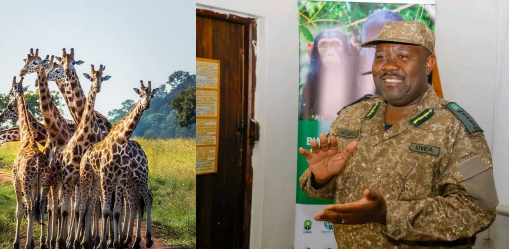


Uganda’s tourism sector is regaining strong momentum after the COVID-19 slowdown, with officials reporting renewed growth driven largely by wildlife conservation and nature-based attractions that continue to position the country among Africa’s leading eco-tourism destinations.
Speaking during an engagement with journalists, leaders from the Uganda Wildlife Authority (UWA) said tourism earnings have rebounded to and, in some areas, surpassed pre-pandemic levels.
Officials emphasized that most visitors travel to Uganda primarily for wildlife and natural landscapes, including national parks, rare species, and biodiversity conservation efforts.
While cultural tourism such as heritage sites and religious pilgrimages is expanding, wildlife experiences remain the backbone of the industry.
Tourism has also been identified as a key pillar in the government’s ambitious economic growth strategy championed by President Yoweri Museveni. The plan prioritizes agriculture, tourism, minerals and energy, science and innovation, and manufacturing as drivers intended to grow the economy significantly in the coming years.
According to UWA Executive Director Dr James Musinguzi, the recovery of tourism demonstrates the growing impact of sustained conservation investments and improved management approaches within protected areas.“Before COVID-19, tourism was Uganda’s leading foreign exchange earner, and we have now recovered strongly.
Nature-based tourism remains our biggest attraction, and this places conservation at the center of economic growth,” Dr. Musinguzi said.
Under Dr. Musinguzi’s leadership, UWA has intensified the use of modern technology and infrastructure to address long-standing conservation challenges.
The authority has deployed drones, expanded electric fencing across several parks, improved access roads, and strengthened anti-poaching operations to reduce cases of wildlife straying into communities.“We are implementing technology to curb cases of animals leaving parks to destroy people’s crops. Through drones, electric fencing, improved roads, and strengthened anti-poaching efforts, we are reducing human-wildlife conflict and protecting both people and animals,” Dr. Musinguzi said.
He noted that conservation gains are directly tied to tourism growth and broader national development goals.“Tourism is Uganda’s leading natural advantage and a key pillar in the country’s economic growth strategy. Growing tourism means growing jobs, communities, and national pride,” he added..
UWA highlighted several conservation milestones now attracting international attention. Among the most notable is the successful restoration of rhinos, once extinct in Uganda.
Beginning with just six animals at the Ziwa Rhino Sanctuary, the population has grown to 60, enabling reintroduction efforts into the Ajai Wildlife Reserve.Tour operators report increasing visitor numbers combining trips between the reserve and nearby parks such as Murchison Falls National Park, creating new tourism circuits and economic opportunities for surrounding communities.
Lion populations are stabilizing in protected areas including Queen Elizabeth National Park, while gorilla tourism continues to thrive in Bwindi Impenetrable National Park.Community Support & Shared Benefits.
Officials said conservation efforts are increasingly being linked to community welfare programs aimed at ensuring local populations benefit directly from wildlife protection.UWA has expanded initiatives supporting communities affected by wildlife through a special fund that helps educate children from affected families.
In addition, the authority allows investors to establish tourism facilities within parks under concession arrangements, creating employment opportunities for nearby communities.
Dr. Musinguzi said these programs are helping build cooperation between conservation agencies and residents living near protected areas.“Uganda aims to grow its economy ten times, and tourism is ranked among the top sectors to make it happen. Promoting our natural heritage is everyone’s responsibility,” he said.
Zoos & Domestic Tourism Expansion.Beyond national parks, conservation education is expanding through wildlife facilities designed to connect more Ugandans with nature. The Uganda Wildlife Conservation Education Centre, commonly known as Entebbe Zoo, was recently ranked among Africa’s top zoological institutions by the Pan African Association of Zoos and Aquaria.
New regional wildlife centers are planned across the country to encourage domestic tourism, allowing residents who cannot travel long distances to experience wildlife locally.
UWA Assistant Commissioner for Communications Bashir Hangi called for closer collaboration between conservation agencies and the media, noting that global traveler perceptions are heavily influenced by public reporting.“When information is not verified or is presented negatively, it affects the destination image. We encourage journalists to engage us, verify facts, and tell the full story of conservation progress,” Hangi said.
He emphasized that tourism revenues directly fund park operations, ranger welfare, conservation programs, and community initiatives.“Every tourist who enters a park contributes to conservation and supports livelihoods. Promoting tourism is therefore promoting national development,” he added.
New Products On The Horizon.In a bid to diversify tourism offerings, UWA announced preparations for Uganda’s first comprehensive chimpanzee census in the northern sector of Bwindi, a move expected to open new tracking experiences alongside existing gorilla tourism.Authorities believe expanding wildlife products, combined with improved promotion and domestic travel campaigns, will further strengthen Uganda’s position as a premier nature destination.
With conservation outcomes improving and tourism numbers rising steadily, sector leaders say Uganda is positioning itself to use its natural heritage as a sustainable engine for long-term economic transformation.