
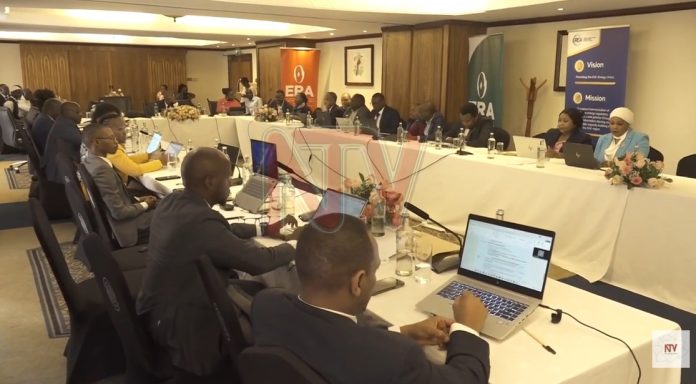


KAMPALA — The 18th Annual General Assembly of the Energy Regulators Association of East Africa (EREA) has kicked off in Kampala with renewed calls for harmonised electricity tariffs, stronger regional energy integration, and expanded investment in generation and transmission infrastructure to keep pace with rapidly rising demand across the region.
The high-level meeting taking place at Serena Hotel in Kampala has brought together regulators, chief executive officers, managing directors, directors general and senior government officials from East African Community partner states, alongside development partners, to deliberate on the future of the region’s energy architecture amid shifting global energy dynamics.
Opening the discussions, the Chief Executive Officer of the Electricity Regulatory Authority (ERA), Eng. Ziria Tibalwa Waako, said regional cooperation had become indispensable in achieving sustainable energy security, stressing that no country in East Africa could independently meet its growing energy needs.
“Regional cooperation is therefore not merely an option, but a necessity,” she said.
Eng. Tibalwa noted that EREA had over the years played a key role in strengthening technical and institutional capacity across member states, particularly through the harmonisation of regulatory frameworks, standards and licensing systems.
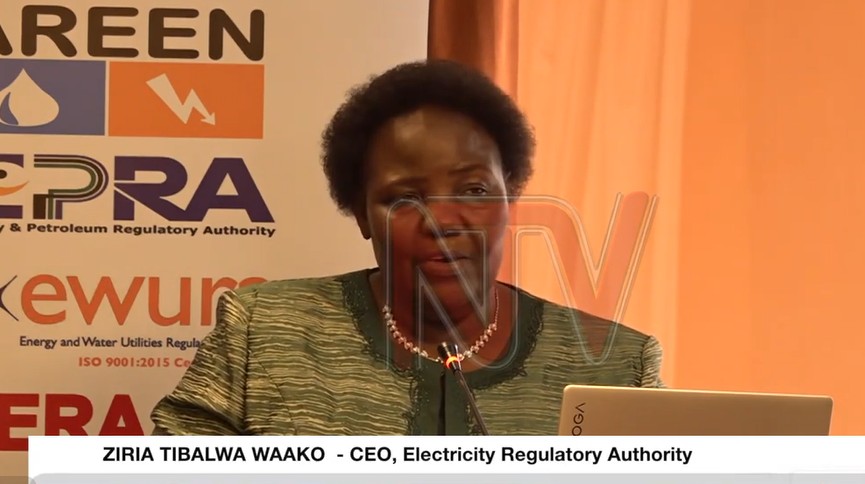
She said these efforts were critical in building investor confidence and enabling the emergence of a more efficient and predictable regional electricity market.
The ERA chief executive further highlighted progress under the Eastern Africa Power Pool, including the establishment of market operators and increased cross-border electricity trade, describing the developments as evidence of growing trust and cooperation among partner states.
At the same time, she highlighted the need to strengthen consumer protection mechanisms as regional power systems become more interconnected, saying access to reliable supply and accurate information remained central to regulatory work.
Call for tariff harmonisation
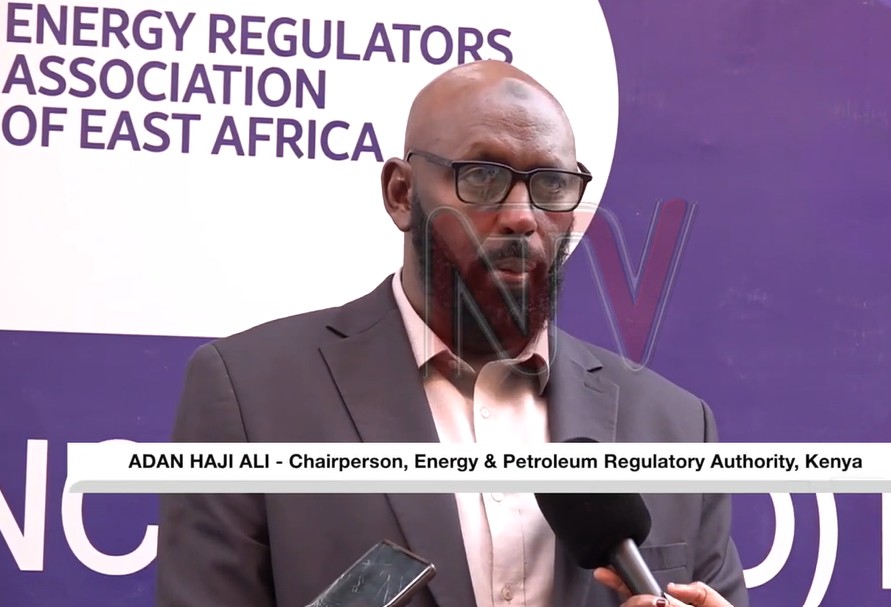
In a key intervention, the Chairperson of Kenya’s Energy and Petroleum Regulatory Authority (EPRA) Hon. Adan Haji Ali called for the urgent establishment of a harmonised electricity tariff framework across East Africa, arguing that the region’s shared geopolitical and economic space demands coordinated pricing systems to avoid market distortions.
He noted that although partner states have varying resource endowments and production costs, they operate within a single economic bloc under the East African Community framework, necessitating greater policy alignment.
“For this reason, pricing mechanisms, particularly in strategic sectors such as electricity, should be designed in a manner that promotes balance and avoids economic distortions or destabilisation of neighbouring economies,” he said.
He warned that persistent disparities in tariffs risk undermining cross-border trade and regional competitiveness, calling instead for equitable approaches that ensure no country is disadvantaged.
Eng. Ali urged the strengthening of legal and regulatory frameworks across the region to support harmonisation, alongside coordinated policy development to guide tariff setting.
He also called for sustained engagement among regulators and institutions to facilitate knowledge sharing and gradual convergence of pricing systems.
Expanding scope of regional cooperation
The assembly heard that EREA has evolved significantly since its inception, expanding its focus from legal and regulatory issues to broader technical, economic and market-based energy matters, thereby strengthening institutional capacity across the region.
Eng. Tibalwa said the benefits of regional integration were ultimately accruing to citizens, citing growing electricity interconnection between Uganda and Kenya, which has expanded significantly in transmission capacity over the years.
She emphasised the need to deepen governance systems, human resource development and institutional capacity building as the energy sector becomes more complex and interconnected.
ERA Board Chair calls for sustained collaboration
The ERA Board Chairperson, Eng. Grania Rosette Rubomboras, echoed calls for stronger regional cooperation, noting that East Africa’s energy future would depend on coordinated regulation, shared expertise and sustained partnerships among member states.
She said EREA had become an increasingly important platform for advancing regional energy priorities and strengthening institutional collaboration.
Eng. Rubomboras highlighted flagship initiatives such as the proposed Energy Technopark and the Energy Integration Centre of Excellence, describing them as critical investments in research, innovation and human capital development.
She reaffirmed the Board’s commitment to supporting EREA’s long-term vision of a sustainable and integrated regional energy system.
Uganda reaffirms commitment
The Permanent Secretary in the Ministry of Energy and Mineral Development, Eng. Irene Pauline Batebe, reaffirmed Uganda’s commitment to regional energy cooperation, describing EREA as central to East Africa’s integration agenda.
She said the region was operating in a rapidly evolving energy environment shaped by climate change, technological advancement, geopolitical tensions and rising demand for affordable electricity.
“The role of regulators has never been more critical,” she said, adding that global disruptions underscored the need for resilient energy systems.
Eng. Batebe highlighted Uganda’s ambition to grow its economy tenfold from about USD 50 billion to USD 500 billion, saying energy would remain a key enabler of that transformation.
She pointed to ongoing investments in hydropower, solar energy and regional interconnection projects under the Eastern Africa Power Pool as central to future supply security.
On petroleum development, she said Uganda was progressing towards production while advancing cross-border infrastructure projects, including the East African Crude Oil Pipeline and planned regional gas and petroleum transport systems.
“These projects continue to anchor East Africa’s economic integration,” she said.
Balancing energy transition and investment needs
The Permanent Secretary urged EREA to prioritise regulatory harmonisation across electricity and petroleum markets to enhance predictability, investor confidence and regional stability.
She warned that Uganda’s electricity demand growth had accelerated sharply from about 6 per cent to nearly 15 per cent annually, describing the trend as requiring urgent and “business unusual” responses.
She called for expanded support for renewable energy solutions, including off-grid, on-grid and mini-grid systems, to accelerate access and support industrialisation and rural electrification.
However, she cautioned against over-reliance on renewable energy financing at the expense of reliable base-load generation, arguing that hydropower and sustainable petroleum use remain essential for stable economic growth.
“We must not neglect reliable base-load power generation necessary for stable economic growth,” she said.
Push to broaden EREA mandate
Eng. Batebe also proposed expanding EREA’s mandate to include nuclear energy and mining regulation, citing the growing global demand for critical minerals such as copper and lithium.
She argued that East Africa must develop harmonised mining regulatory frameworks to position itself competitively in global energy transition value chains, stressing the need for value addition and coordinated regional positioning.
“The mining sector must advance alongside electricity, energy and petroleum sectors,” she said.
Capacity building and outlook
Delegates further welcomed EREA’s increasing focus on capacity building, including the planned Centre of Excellence aimed at strengthening technical expertise and institutional development across member states.
The assembly concluded with renewed commitments to deepen regional cooperation, accelerate infrastructure development and strengthen regulatory harmonisation across the East African energy sector.
Participants observed that while political federation remains a long-term aspiration, economic integration is already advancing steadily through practical cooperation in the energy sector under EREA.