
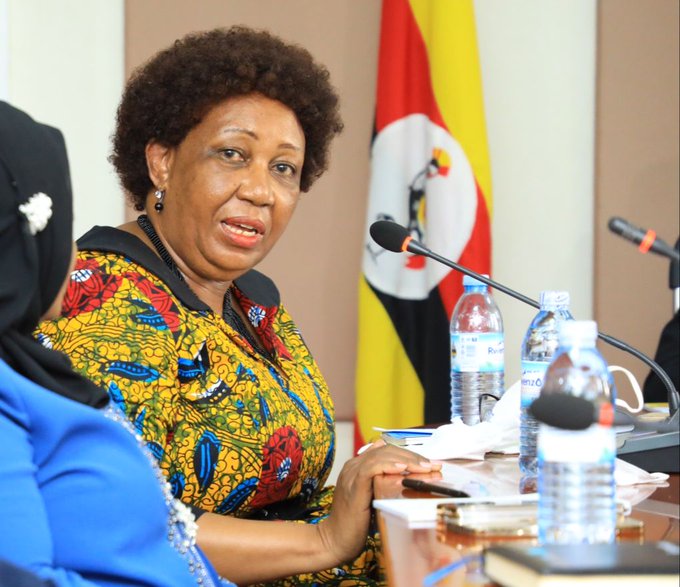

 following the launch of a formal investigation by the Inspectorate of Government (IGG) into allegations of maladministration, corruption and abuse of office within the institution.)
KAMPALA — Panic and uncertainty have gripped the Uganda Human Rights Commission (UHRC) following the launch of a formal investigation by the Inspectorate of Government (IGG) into allegations of maladministration, corruption and abuse of office within the institution.
In a letter dated March 25, 2026, addressed to the Commission Secretary, the Inspectorate confirmed receipt of multiple complaints citing financial misconduct, abuse of office and mismanagement in the affairs of the Commission.
The letter, signed by Inspector General of Government Justice Naluzze Aisha Batala, indicates that investigations have formally commenced under the Inspectorate’s legal mandate to probe corruption, abuse of office and neglect of duty in public institutions.
“This office has commenced investigations into the matter,” the letter reads in part.
This news website have exclusively learnt that two officers have been assigned to conduct the inquiry, with the UHRC directed to provide full cooperation, including availing relevant documents and facilitating interviews with staff.
A copy of the letter was also sent to the UHRC Chairperson, Mariam Wangadya, signalling that the probe reaches the top leadership of the Commission.
Background of the allegations
The investigation follows a series of whistleblower reports that have cast a spotlight on governance and financial management at the Commission, raising concerns about the institution’s adherence to its constitutional mandate.
The UHRC, established in November 1996 under Article 51 of the Constitution to promote and protect human rights, is expected to be composed of a Chairperson and at least three members of “high moral character and proven integrity.” However, insiders allege that the Commission is increasingly being run in a manner that concentrates power in the hands of the Chairperson, sidelining other Commissioners and technical staff.
Ms Wangadya, who joined the Commission in September 2021, is accused by whistleblowers of presiding over a system marked by centralised decision-making, weak internal controls and alleged misuse of public resources.
Alleged financial impropriety
Among the key allegations under scrutiny is the handling of statutory contributions. Sources claim that despite reportedly being ineligible to contribute to the National Social Security Fund (NSSF) at the time of her appointment, Ms Wangadya allegedly directed the continuation of a 10 percent government contribution in her favour until March 2025, raising questions about possible unlawful benefit.
Further claims suggest that the Chairperson assumed direct control over the Commission’s budgeting processes for the 2024/2025, 2025/2026 and 2026/2027 financial years, allegedly sidelining established structures such as the Management Committee and Finance Committee.
Whistleblowers also point to a supplementary allocation of approximately Shs10.4 billion, reportedly secured through engagement with the Ministry of Finance Planning and Economic Development and the Attorney General’s office. Of this amount, about Shs2 billion was earmarked for salary enhancements for Commissioners and staff.
However, it is alleged that the Chairperson unilaterally determined her own remuneration, placing it significantly above that of other Commissioners.
In addition, a new budget line for the Office of the Chairperson is said to have been introduced, with claims that funds under this vote were channelled through personal assistants, including Ms Pauline Nansamba and Ms Doreen Mukunyu Nabatte. The funds were allegedly used for personal expenditures such as foreign travel, vehicle purchases and generators for private residences.
Human resource concerns
The probe also follows reports of strained staff relations within the Commission, with insiders describing a work environment characterised by intimidation and low morale.
Sources allege that several employees have resigned citing harassment and what they describe as inhumane treatment. There are also claims of irregular promotions, with some individuals reportedly elevated to senior positions without due process, while long-serving staff are sidelined.
Further allegations indicate that staff approaching retirement have been denied exit in contravention of public service guidelines, while others have allegedly been strategically positioned to facilitate questionable recruitment, transfers and dismissals.
Procurement and asset management queries
Questions have also been raised about the use of public funds and management of Commission assets.
Whistleblowers allege that resources intended for civic education, monitoring and inspection activities were diverted for personal use.
A particularly contentious issue involves the procurement of two generators valued at approximately Shs160 million. According to sources, when the generators were delivered to the Commission headquarters, technical staff were reportedly unaware of the procurement or intended use.
Subsequent internal communication reportedly indicated that the generators had been allocated to the private residences of Ms Wangadya and Commissioner Crispin Kaheru. The development triggered unease among staff, with some distancing themselves from the transaction.
In a twist, one of the generators and a vehicle was reportedly returned to the Commission premises by aides linked to Commissioner Kaheru, while a vehicle previously reported missing from the Commission fleet was also returned to the parking yard in mid-March by the same person.
Broader governance concerns
Sources further allege that key institutional processes, including engagement with Parliament and the Ministry of Justice and Constitutional Affairs, have been undermined, with critical documents such as budgets and policy papers allegedly treated as personal rather than institutional records.
Insiders claim that decision-making at the Commission is concentrated within a small inner circle, leaving other Commissioners and senior technical staff with limited influence over core operations.
By press time, neither the UHRC leadership nor the Chairperson had issued an official response to the allegations.
The IGG investigation is expected to scrutinise the claims and determine whether there were breaches of the law, with observers noting that the outcome could have far-reaching implications for accountability, governance and public trust in one of Uganda’s key constitutional bodies.
The unfolding developments place the spotlight firmly on the Commission’s leadership as the country awaits the findings of the Inspectorate’s inquiry.
In a measured tone, concerned citizens and governance advocates are increasingly calling for Mariam Wangadya to step aside to allow the Inspectorate of Government investigations to proceed independently and without undue influence, as scrutiny intensifies over the leadership of the Uganda Human Rights Commission.