
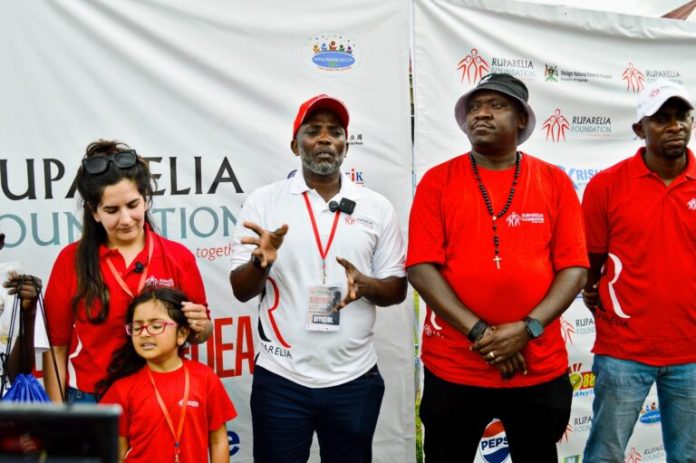


The powerful scenes unfolding at the Rajiv Ruparelia (RR) Free Eye Camp in Bukedea have done more than restore vision,they have exposed a silent but widespread public health emergency that now demands urgent national attention.
What began as a philanthropic outreach has evolved into a stark reflection of Uganda’s strained eye care system. Within just days, thousands of patients turned up seeking treatment, many of them requiring urgent surgical intervention. The message emerging from Bukedea is unmistakable: the burden of untreated eye conditions in Uganda is far greater than previously acknowledged.
At the heart of this call to action is Sheena Ruparelia, whose remarks during the camp underscored a troubling reality,far too many Ugandans are living with preventable or treatable blindness simply because essential services remain inaccessible or unaffordable.
The overwhelming turnout in Bukedea is not an isolated case. Across rural Uganda, access to specialized eye care remains severely limited, with most services concentrated in major urban centers.
For many families, the cost of surgery often running into millions of shillings,places treatment far beyond reach. As a result, manageable conditions like cataracts and refractive errors are left to worsen, quietly eroding quality of life.
Medical experts, including Lawrence Muganga, have pointed out that Uganda’s health system is increasingly reliant on sporadic charitable interventions. While these initiatives are undeniably life-changing, they are not structured to meet the scale or consistency of demand.
The consequence is a growing backlog of untreated conditions from cataracts to childhood vision impairments affecting education outcomes, economic productivity, and overall well-being.
Beyond the numbers lie deeply personal stories.
Children unable to learn because they cannot see the blackboard. Elderly individuals losing their independence due to avoidable blindness. Families slipping further into poverty as loved ones become dependent.
In Bukedea, patients traveled long distances some even crossing international borders in search of care. Their journeys reflect not only desperation but also the absence of reliable, accessible services closer to home.
And for every patient treated at the camp, many more remain unseen and untreated in their communities.
The success of the Bukedea eye camp offers a powerful blueprint for what is possible when resources, expertise, and coordination come together. Yet it also raises a critical question: why should such essential healthcare services depend on occasional outreach programs?
A sustainable solution lies in embedding eye care firmly within Uganda’s national healthcare framework. Key priorities include:
Expanding ophthalmic units in regional referral hospitals,training and deploying more eye care specialists,subsidizing essential surgeries and treatments,strengthening early screening programs, particularly in schools,public-private partnerships could also play a pivotal role combining the efficiency and innovation of private actors with government support to ensure affordability and wider reach.