




Kampala: Shortly after 9 am, Local Government Minister Balaam Barugahara walked into Naiku Health Centre III in eastern Uganda expecting to inspect a public health facility.
Instead, he found what has since become one of the defining images of his ministry’s first months in office.
Government records indicated that nearly 20 health workers were assigned to the facility. Only a handful were reportedly present when the minister arrived. As officials examined attendance registers and staffing records, questions quickly emerged about whether some employees listed on the government’s payroll actually existed or were reporting for duty.
The inspection did not end there.
Documents were seized for further verification. District officials were asked to explain discrepancies. The minister publicly questioned how communities could continue facing shortages of health workers while government payrolls appeared fully staffed.
Days later, similar scenes unfolded elsewhere.
Schools were inspected. District offices were visited without prior notice. Procurement records were scrutinised. Local government officials were suspended pending investigations. Allegations of payroll fraud, absenteeism and questionable public projects moved from audit reports into national headlines.
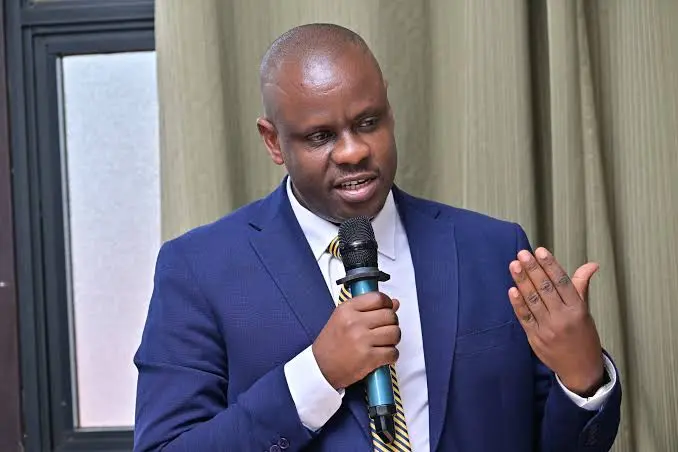
For many Ugandans frustrated by years of complaints about poor public services, the inspections represented something unusual: senior political leaders leaving their offices to verify, firsthand, whether government systems reflected realities on the ground.
Yet another, quieter story has been unfolding alongside those inspections.
Many of the governance questions now dominating Uganda’s public conversation closely resemble issues that businessman and independent parliamentary candidate Abraham Luzzi spent months raising during the 2026 election campaign.
Luzzi lost his bid to represent Kampala Central Division in Parliament. His defeat appeared, at least politically, to close that chapter.
But while the election ended, many of the questions at the heart of his campaign did not.
When elections end but ideas remain
Political campaigns are often remembered by their winners.
The losing candidates gradually disappear from public attention, their manifestos shelved alongside election posters and campaign slogans.
Occasionally, however, the ideas survive.
Across democracies, proposals rejected by voters have later resurfaced through governments facing similar policy challenges. Sometimes those ideas are borrowed consciously. Sometimes they emerge independently because different political actors confront the same institutional weaknesses.
Determining which explanation applies is rarely straightforward.
Uganda’s current anti-corruption drive presents such a case.
There is no public evidence that Barugahara or State Minister for Local Government Justine Nameere based their inspection programme on Luzzi’s manifesto. Their authority comes through presidential appointment, cabinet responsibility and the statutory mandate of the Ministry of Local Government.
Government reforms evolve through many influences: civil servants, auditors, parliamentary committees, presidential priorities, public pressure and institutional experience.
Yet the overlap is difficult to ignore.
Months before the current inspections began, Luzzi’s campaign argued that Uganda’s biggest governance challenge was not simply corruption in the abstract but the failure to verify what government believed it already knew.
Who actually works?
Who receives salaries?
Which projects were genuinely completed?
Do official records reflect reality?
Those questions now sit at the centre of the ministry’s inspection campaign.
That does not establish influence.
It does, however, suggest that a political argument dismissed by voters may nevertheless have anticipated concerns that government itself is now confronting.
Looking beyond paperwork
The inspections have also highlighted a broader shift in how accountability is being pursued.
Traditionally, much of government oversight has depended on documentation generated within public institutions.
Attendance registers.
Payroll records.
Inspection reports.
Completion certificates.
Financial returns.
Such documents remain essential to public administration.
But they become less useful if they cannot be independently verified.
Barugahara’s approach has been noticeably different.
Rather than relying exclusively on reports submitted to ministry headquarters, he has repeatedly insisted on seeing conditions personally.
Schools have been checked against enrolment records.
Health facilities against staffing lists.
Infrastructure against expenditure reports.
District offices against administrative performance.
The principle is simple.
Paperwork alone cannot confirm whether citizens are receiving public services.
For governance specialists, this represents more than a change in inspection style.
It reflects a growing recognition that accountability depends as much on verification as it does on reporting.
That philosophy also ran through significant sections of Luzzi’s manifesto, which argued that public administration should increasingly be judged by measurable outcomes rather than bureaucratic compliance.
Whether expressed by an independent candidate or implemented by government ministers, the underlying question remains remarkably similar:
How does the state know that what is recorded on paper actually exists in practice?
Part II: The High Cost of Invisible Government
Ghost workers have long occupied a familiar place in Uganda’s political vocabulary.
Almost every few years, audit reports, parliamentary committee hearings or inspectorate investigations reveal allegations that salaries have continued flowing to people who cannot readily be accounted for. The figures vary from case to case, but the underlying concern remains consistent: public money is being allocated to positions that may not correspond with the people delivering public services.
The consequences extend well beyond financial loss.
When a payroll contains names that do not translate into teachers in classrooms, nurses in health centres or extension workers in farming communities, the result is felt most acutely by citizens who rely on those services. A district may appear adequately staffed on paper while remaining chronically understaffed in practice.
It is this disconnect between official records and lived reality that has become a defining feature of the Local Government ministry’s recent inspections.
The Mbale inspection
One of the ministry’s most closely watched visits took place at Naiku Health Centre III in Mbale District.
During the inspection, the minister questioned why attendance at the facility appeared inconsistent with staffing information held in official records. According to statements made during and after the visit, several individuals listed on the payroll could not immediately be verified as active staff members at the facility.
The inspection prompted the collection of personnel records for further examination by relevant authorities.
The allegations remain subject to investigation, and any findings concerning payroll fraud or administrative misconduct will ultimately depend on evidence reviewed through the appropriate legal and administrative processes.
Even so, the inspection illustrated a wider governance problem.
Administrative systems depend upon reliable information.
When governments cannot easily establish who is employed, where they work or whether they are performing their assigned duties, planning becomes more difficult, oversight weakens and confidence in public institutions declines.
The challenge is not simply identifying wrongdoing after it has occurred. It is ensuring that systems exist to detect inconsistencies before they become entrenched.
More than corruption
Public debate often frames ghost workers primarily as a corruption issue.
That description is accurate, but incomplete.
It is equally an issue of administrative capacity.
Every salary allocated to a fictitious employee is funding that cannot be used to recruit a qualified professional.
Every inaccurate payroll record affects budgeting decisions.
Every unverified staffing list undermines confidence in the quality of public administration.
The implications are especially significant in sectors such as education and healthcare, where staffing shortages have direct consequences for service delivery.
The ministry’s inspections have therefore shifted attention away from abstract discussions about corruption and towards a more practical question:
Are public institutions functioning as the government believes they are?
From allegations to accountability
The inspections have not been confined to payrolls.
Schools have also become a focus of attention.
At one primary school visited during the ministry’s field operations, enrollment figures recorded in official documentation reportedly differed significantly from the number of pupils physically present.
Officials alleged that inflated enrollment data may have influenced the allocation of government resources.
Those allegations remain under investigation.
Like all administrative inquiries, they require evidence capable of distinguishing intentional misconduct from recordkeeping errors, population movements or other legitimate explanations.
That distinction matters.
An effective accountability system must investigate rigorously without presuming guilt.
It must protect public resources while preserving procedural fairness for those accused of wrongdoing.
The credibility of any reform programme depends on maintaining both objectives simultaneously.
An earlier argument
Long before these inspections began attracting national attention, Abraham Luzzi’s manifesto argued that administrative accountability depended upon verification rather than assumption.
Among its proposals was the creation of integrated government databases capable of connecting identity records, employment information, taxation and other public-sector systems.
The objective was not merely technological modernisation.
It was to improve the government’s ability to verify its own information.
Under such a framework, employment records could be checked against identity systems.
Payroll information could be reconciled with tax records.
Administrative inconsistencies could be identified more quickly.
Technology, in this conception, becomes a tool for institutional integrity rather than an end in itself.
Whether such reforms would prove practical or affordable is open to legitimate debate.
What is less controversial is the underlying principle: governments function more effectively when they possess accurate, connected and verifiable information.
The wider question
The current inspections have generated considerable public interest because they transform administrative concerns into visible political events.
A minister arrives without notice.
Documents are examined.
Questions are asked publicly.
Officials are required to explain discrepancies immediately.
The visibility is significant.
But visibility alone cannot sustain reform.
The longer-term challenge is institutional.
Can governments move from responding to irregularities one inspection at a time towards building systems that identify and prevent those irregularities before they occur?
That question extends beyond any individual minister or political campaign.
It goes to the heart of how modern states govern.
And it is here that the conversation begins to move beyond inspections and towards the architecture of public administration itself.
Part III: From Inspections to Institutions — Can Administrative Reform Outlast Political Momentum?
Anti-corruption campaigns are often judged by their most dramatic moments.
An unexpected inspection. A suspension. A high-profile arrest. Images of officials being questioned in public can quickly dominate news cycles and create the impression that government is responding decisively to longstanding concerns.
But governance experts frequently measure success differently.
The more important question is not whether irregularities are uncovered. It is whether the institutions responsible for preventing those irregularities become stronger once the headlines fade.
This distinction is increasingly relevant to Uganda’s evolving accountability agenda.
The Ministry of Local Government’s inspection programme has succeeded in drawing national attention to administrative failures that might otherwise have remained confined to audit reports or internal correspondence. Yet inspections, however visible, represent only the beginning of the accountability process.
What follows is considerably more important.
Were investigations completed?
Did evidence support the initial allegations?
Were innocent officials cleared?
Were disciplinary actions consistent with the law?
Were systems improved to prevent similar failures elsewhere?
Without those answers, accountability risks becoming reactive rather than transformative.
Reform is about systems, not only individuals
One of the recurring lessons from public-sector reform around the world is that institutional weaknesses rarely originate from a single individual.
A flawed procurement process may involve several offices.
An inaccurate payroll may expose weaknesses in recruitment, supervision and record management.
An incomplete public project may reflect failures in planning, contracting, inspection and certification.
Holding individuals accountable remains essential where misconduct is established.
But sustainable reform requires governments to ask a second question: what allowed the problem to occur in the first place?
This is where institutional reform differs from enforcement.
Enforcement addresses conduct.
Institutional reform addresses conditions.
Countries that have made measurable progress in improving public administration have generally combined both approaches. Officials found responsible for misconduct face investigation through due process, while governments simultaneously strengthen internal controls, modernise information systems and improve oversight mechanisms.
The objective is not simply to punish failure.
It is to reduce the likelihood of failure recurring.
The technology question
Digital government has become one of the defining governance reforms of the past two decades.
Across Africa and beyond, governments have invested in electronic procurement systems, integrated financial management platforms, digital identity programmes and online tax administration. These initiatives are often discussed in terms of convenience and efficiency, but they also serve another purpose: they make government transactions more transparent and easier to verify.
A procurement process conducted electronically leaves an audit trail.
Payroll changes can be tracked.
Approvals can be timestamped.
Records become easier to reconcile across institutions.
Technology, however, is not a substitute for accountability.
Poor governance can exist within sophisticated digital systems just as it can within paper-based administrations. Technology is only as effective as the institutions that manage it and the safeguards that govern its use.
Nevertheless, stronger information systems reduce opportunities for administrative opacity and improve the ability of oversight bodies to detect irregularities before they become systemic.
It is within this broader international trend that several proposals contained in Abraham Luzzi’s manifesto warrant attention.
Among them was the call for greater integration of public records across government agencies, including employment, taxation, identity and other administrative systems. The proposal reflected a belief that fragmented information weakens accountability, while connected information strengthens it.
Whether such reforms are feasible in Uganda’s fiscal and institutional context is a legitimate subject of policy debate.
What is difficult to dispute is the underlying premise: governments govern more effectively when their information is accurate, interoperable and capable of independent verification.
Convergence does not imply influence
The similarities between aspects of Luzzi’s manifesto and the ministry’s current priorities invite careful interpretation.
It would be inaccurate to suggest that the government’s inspection programme originated from his campaign. There is no publicly available evidence to support such a conclusion.
Equally, it would be simplistic to dismiss the similarities altogether.
Public policy often develops through convergence.
Different actors identify the same institutional weaknesses because those weaknesses are visible to anyone examining the system.
Auditors identify them.
Civil servants identify them.
Researchers identify them.
Political candidates identify them.
Government ministers identify them.
The overlap does not necessarily indicate coordination.
It may instead reflect a shared diagnosis of the challenges confronting public administration.
In Luzzi’s case, the issues highlighted during his campaign—administrative verification, digital governance, payroll integrity, procurement oversight and personal accountability—have since become increasingly prominent within the government’s own reform agenda.
That observation does not elevate his role beyond what the evidence supports.
It simply recognises that the governance debate has moved in a direction where many of those themes now occupy centre stage.
The test of credibility
As the inspection programme continues, expectations are likely to grow.
Public enthusiasm generated by high-profile interventions can only be sustained if investigations produce credible outcomes.
This requires balance.
Citizens expect decisive action where evidence points to corruption or negligence.
Public officers are equally entitled to fair investigations, due process and the presumption of innocence until responsibility is established through lawful procedures.
These principles are not contradictory.
They are complementary.
Strong accountability depends on both.
Governments strengthen public trust not only by exposing wrongdoing, but also by demonstrating that investigations are impartial, evidence-based and insulated from political pressure.
That standard will ultimately determine how Uganda’s current reform efforts are remembered.
The inspections have already changed the national conversation about administrative oversight.
Whether they produce enduring institutional reform remains an open question.
The answer will depend less on the number of inspections conducted than on the strength of the institutions they leave behind.
Part IV: Influence Without Office — When a Political Campaign Becomes Part of a Governance Conversation
One of the enduring assumptions in politics is that influence belongs to those who win elections.
Legislators write laws. Ministers supervise institutions. Presidents set national priorities. Electoral victory, therefore, is often viewed as the gateway to meaningful public influence.
Reality is frequently more complex.
Some of the most consequential policy debates begin outside government. They emerge through academic research, civil society, professional associations, business leaders and political candidates whose proposals continue to circulate long after campaigns have ended.
The value of those ideas is not determined by electoral arithmetic.
It is determined by whether they remain relevant when governments confront the problems they sought to address.
That appears to be part of the story surrounding Abraham Luzzi.
His campaign ended without a parliamentary seat. He did not acquire the legislative platform from which he intended to advocate his proposals, nor did he obtain executive authority to implement them. From a political standpoint, the election produced a clear outcome.
Yet governance is not shaped only by those who hold office.
Months after the election, issues that featured prominently in Luzzi’s manifesto—payroll integrity, administrative verification, digital governance, procurement oversight and public accountability—have become increasingly visible within the work of Uganda’s Ministry of Local Government.
The overlap does not establish a direct line of influence. There is no public evidence that government officials adopted their approach from Luzzi’s manifesto, nor would such a conclusion reflect the way public policy typically develops.
Instead, it reflects something more nuanced.
Independent political actors and government institutions have arrived at similar concerns from different directions.
That convergence is, in itself, politically significant.
The limits of comparison
Drawing comparisons between a campaign manifesto and government action requires restraint.
Luzzi’s reform agenda extended far beyond the areas currently receiving attention through ministerial inspections.
His manifesto proposed wide-ranging constitutional, political and administrative reforms, including changes to the structure of Parliament, electoral processes, public expenditure, taxation and executive government.
Some proposals would require constitutional amendments.
Others would demand broad political consensus.
Several attracted debate because of their legal and practical implications.
Those broader reforms are not reflected in the current work of the Ministry of Local Government.
The areas of convergence are considerably narrower.
They relate primarily to administrative efficiency, accountability, verification of public records and closer scrutiny of how public resources are managed at the local government level.
Recognising that distinction is essential.
It avoids overstating the relationship between Luzzi’s campaign and government policy while allowing for a fair assessment of where their priorities intersect.
Measuring reform by outcomes
The visibility of the current inspections has generated public interest, but visibility alone is not a measure of success.
Ultimately, anti-corruption efforts are judged by outcomes rather than announcements.
How many investigations result in evidence capable of supporting prosecution?
How many cases conclude through the courts or administrative disciplinary processes?
How much public money is recovered?
Have payroll systems become more accurate?
Has procurement improved?
Do schools, health facilities and district administrations function better than they did before?
These are the indicators by which institutional reform is measured.
They are also the standards against which any governance proposal—whether advanced by government, opposition, civil society or independent candidates—must eventually be evaluated.
The debate therefore extends beyond personalities.
It becomes a question of institutional performance.
An evolving political legacy
For Abraham Luzzi, the political implications are unusual.
His 2026 parliamentary campaign did not succeed electorally.
By conventional political standards, that might have marked the end of his immediate influence.
Instead, it has become a reference point within a broader conversation about governance.
That does not mean his manifesto has become government policy.
Nor does it imply that ministers are implementing his programme.
It means that the institutional questions he raised continue to resonate at a moment when Uganda’s public administration is itself undergoing closer scrutiny.
That distinction matters because democratic politics is not only about elections.
It is also about ideas.
Winning office provides authority to implement policy.
Losing office—or never holding it at all—does not necessarily prevent ideas from contributing to national debate.
History offers many examples of policy proposals that gained significance only after political circumstances changed.
Whether Luzzi’s reform agenda ultimately joins that category remains uncertain.
What is already evident is that the governance issues he emphasised during his campaign remain central to Uganda’s ongoing discussion about accountability, transparency and public service delivery.
The broader lesson
Perhaps the larger story is not about one candidate or one ministry.
It is about how democratic societies process ideas.
Campaigns often introduce proposals that appear politically marginal at the time. Some disappear entirely. Others resurface years later through different institutions, different leaders and different circumstances.
The path from political advocacy to public policy is rarely linear.
Ideas compete.
Institutions evolve.
Governments adapt.
Public expectations change.
In Uganda today, the debate over administrative accountability has entered a more visible phase. Whether that momentum results in durable institutional reform will depend on the integrity of investigations, the consistency of enforcement, respect for due process and the willingness to address systemic weaknesses rather than isolated failures.
Those challenges extend beyond any single minister, manifesto or election.
They belong to the broader project of strengthening public institutions.
In that respect, Abraham Luzzi’s 2026 campaign may ultimately be remembered less for the constituency it failed to win than for the governance questions it helped place into public conversation.
Whether those questions produce lasting institutional change is a matter that only future reforms and their measurable outcomes will answer.