
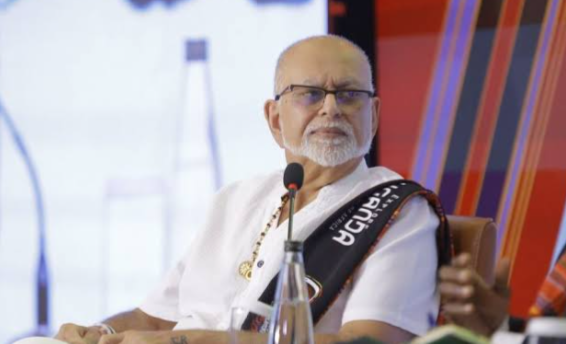


I commend Hon. Ibrahim Ssemujju Nganda, the former Member of Parliament for Kira Municipality, for his commitment to holding government accountable for public expenditure. Oversight of public spending is an important pillar of good governance because it helps ensure that public officials act in the interests of citizens rather than pursuing personal gain.
President Yoweri Kaguta Museveni has repeatedly emphasized that the fight against corruption and misuse of public funds requires collective responsibility. He has often argued that when citizens remain silent in the face of wrongdoing, society as a whole suffers the consequences.
However, when one carefully examines Hon. Ssemujju’s recent presentation on television regarding government rental agreements involving properties owned by businessman Dr. Sudhir Ruparelia, an important question emerges. At no point did he demonstrate that government’s decision to rent properties from a private investor is illegal. Neither did he cite any provision of the Public Procurement and Disposal of Public Assets (PPDA) Act that prohibits a private individual or company from entering into multiple contracts with government entities.
Instead, much of the discussion appeared to rely on emotional arguments that risk creating the impression that investors who do business with government are somehow acting improperly. This is unfortunate because investors play a critical role in national development through tax contributions, job creation and infrastructure development.
Dr. Sudhir Ruparelia is one of Uganda’s most prominent local investors. His business journey began modestly after returning to Uganda with savings accumulated from working various jobs in the United Kingdom. He invested heavily in sectors such as real estate, education, hospitality and agriculture, building facilities that have subsequently been utilized by both private institutions and government agencies.
The reality is that governments across the world frequently rent properties from private individuals and companies when public infrastructure is insufficient. Uganda is no exception. Government’s use of privately owned buildings has enabled services to continue while public facilities are being developed or expanded.
Indeed, over the years government has steadily invested in constructing its own facilities, including major institutions such as the Uganda Police Headquarters and other infrastructure under the Justice, Law and Order Sector. Until sufficient public facilities are available, leasing suitable private premises remains a practical solution.
It is also worth noting that government does not only rent properties from Dr. Sudhir. Various institutions and private property owners, including cultural institutions such as the Buganda Kingdom, have rented premises to government agencies over the years. Such arrangements are generally accepted as long as they comply with procurement regulations.
The focus, therefore, should not be on whether Dr. Sudhir owns multiple properties rented by government. The real issue should be whether the procurement process was conducted transparently, competitively and in accordance with the PPDA Act. If there is evidence of wrongdoing, it should be investigated thoroughly. If there is no evidence of illegality, then public debate should avoid unfairly targeting investors who contribute significantly to the economy.
Beyond business, Dr. Sudhir has also participated in a number of charitable initiatives through the Ruparelia Foundation. These include support for communities across the country, donations to cultural institutions and health outreach programs aimed at improving the lives of ordinary Ugandans.
As citizens, journalists and public leaders, we should continue demanding transparency and accountability from government. However, we must also recognize the role investors play in economic growth and national development. Criticism should be based on facts, evidence and the law, not on narratives that risk discouraging investment.
Hon. Ssemujju’s concerns may be well intentioned, but public discussions about government contracts should focus on procurement procedures and compliance rather than portraying investors as adversaries. Uganda needs both accountability and investment if it is to continue progressing.