


Uganda’s economic story over the past three decades is one of structural rehabilitation and cautious acceleration. Emerging from prolonged instability in the 1980s, the country implemented liberalization reforms that stimulated private investment, strengthened trade corridors and gradually integrated the economy into regional markets.
By 2025, nominal GDP approached US$65 billion, supported by services expansion, urban construction and a steadily growing population. Yet average income remains modest, GDP per capita hovers near US$1,070, and poverty metrics continue to reflect uneven income distribution.
Against this macro backdrop, an increasingly visible wealth class has emerged.
A Concentrated Capital Class
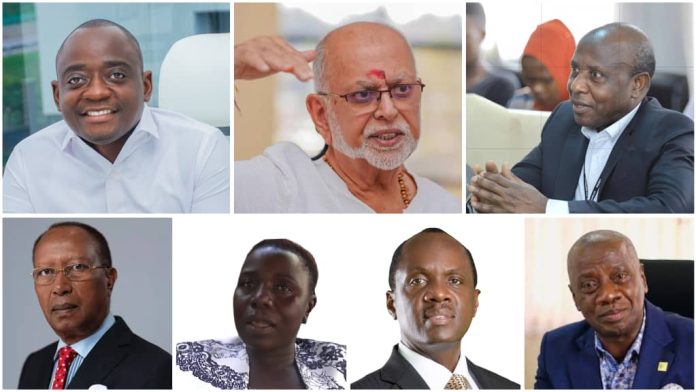
The combined estimated net worth of Uganda’s 14 wealthiest individuals stands at approximately US$10.325 billion, representing nearly 15.9% of national GDP.
In an economy where public equity markets remain shallow and capital markets underdeveloped, wealth formation has occurred primarily through privately held operating companies — especially in real estate, manufacturing and trade.
The 2026 Wealth Power Index provides an asset-based view of private capital accumulation and sectoral positioning.
The Leaders of Uganda’s Capital Structure
Hamis Kiggundu (US$1.3B)
A new-generation industrial property developer, Kiggundu’s wealth is anchored in large-scale commercial real estate, agro-processing facilities and fintech expansion through Hamz Pay. His portfolio includes integrated mixed-use developments and infrastructure-linked property assets in Kampala.
Sudhir Ruparelia (US$1.2B)
Founder of the Ruparelia Group, his diversified holdings span hospitality, education, insurance and property development — representing one of Uganda’s most established conglomerate structures.
John Bosco Muwonge (US$850M+)
A low-profile investor concentrated in high-value urban commercial property assets.
Drake Lubega (US$800M+)
Real estate-focused entrepreneur with hospitality and industrial interests.
Mansour Matovu (US$785M)
Urban plaza and commercial center developer with roots in grassroots trading.
Karim Hirji (US$785M)
Founder of the Dembe Group, active in hospitality, auto distribution and commercial real estate.
Christine Nabukeera (US$710M+)
Investor in high-end residential and commercial property portfolios.
Tom Kitandwe (US$700M+)
Diversified landholder and telecom-linked investor.
Guster Lule Ntake (US$670M+)
Hospitality and agricultural entrepreneur.
Godfrey Kirumira (US$615M+)
Petroleum distribution and manufacturing investor.
Charles Mbire (US$600M+)
Telecom, pharmaceuticals and energy board-level influence.
Amos Nzeyi (US$550M+)
Founder of Crown Beverages and diversified food and hospitality assets.
Ahmed Omar Mandela (US$535M+)
Founder of Mandela Group, spanning City Oil, City Tyres and Café Javas.
Patrick Bitature (US$220M+)
Simba Group founder with telecommunications and energy assets.
Structural Insight
Real estate remains the dominant wealth engine. Secondary pillars include petroleum distribution, food manufacturing and hospitality — all sectors reliant on asset-heavy investment.
The Broader Question
As oil production ramps up and financial digitization deepens, private capital will likely expand further. The key issue is whether wealth growth will translate into broad income gains — or entrench capital concentration in a still low-income economy.