

Pan-Africanism is a movement that is geared towards uniting and solidifying relationships between Africans and people of African descent worldwide. It has not been an easy concept to implement as factors such as slavery, cultural division and colourism to name a few reasons have threatened to dampen the ideals of Pan-Africanism.
The brave souls who have attempted to institute policies to unite all Africans regardless of where they are located have been met with much resistance. Their characters have been villainized and ultimately many of their principles have died along with them.
1. Eduardo Mondlane
Eduardo Chivambo Mondlane was a history and sociology professor at Syracuse University. Mondlane was also the founding President of the Mozambican Liberation Front (FRELIMO) in 1962.
Mondlane left his position as a professor to concentrate on growing FRELIMO. FRELIMO was instrumental in the fight for Mozambique’s Independence from Portugal.
On February 3, 1969, Mondlane was killed when he opened a package that was laced with an explosive.
2. Tom Mboya

Thomas Joseph Odhiambo “Tom” Mboya is credited as being one of the forefathers of the Republic of Kenya.
In addition, Mboya was a Pan-Africanist, trade unionist, independence activist, Cabinet Minister and author.
He roused crowds all over the world with talks that encouraged Kenya’s freedom from British rule. Mboya also initiated the trade union movement in his homeland, formed the first All-Africa ICFTU labor organization and worked in conjunction with Dr Martin Luther King Jr. and former President John F. Kennedy to formulate educational opportunities for African students in the U.S.
On July 5 1969, Mboya was shot and killed as he left a pharmacy.
During an arrest before his assassination, Mboya inquired from the police, “Why don’t you go after the big man?” This statement has been taken as evidence that his death was politically motivated.
3. Agathe Uwilingiyimana

Agathe Uwilingiyimana was a scholar and the Prime Minister of Rwanda from 1993 to 1994.
Uwilingiyimana a member of the Hutu tribe, caught the attention of oppositional forces who belonged to the Tutsi tribe. Members of the media placed Uwilingiyimana in their crosshairs because they thought women should not occupy the same positions as men.
The Rwandan Patriotic Front, who were comprised of Tutsi members were doubly troubled as they were mistrustful of the Hutu.
On April 6, 1994, President Habyarimana; Cyprien Ntaryamira, the President of Burundi and the Chief of Staff of the Rwandan military; and many others were on the president’s private jet that was shot down out of Rwandan airspace.
After addressing the Rwandan people, the United Nations sent a peacekeeping escort to Uwilingiyimana home comprised of 10 troops from Belgium in the wee hours of the morning. They were to shield Uwilingiyimana and her family from harm as she intended to head to Radio Rwanda the next day to encourage calm.
Uwilingiyimana, her husband and her ten Belgian peacekeepers were gunned down. She left behind three children.
4. Thomas Sankara
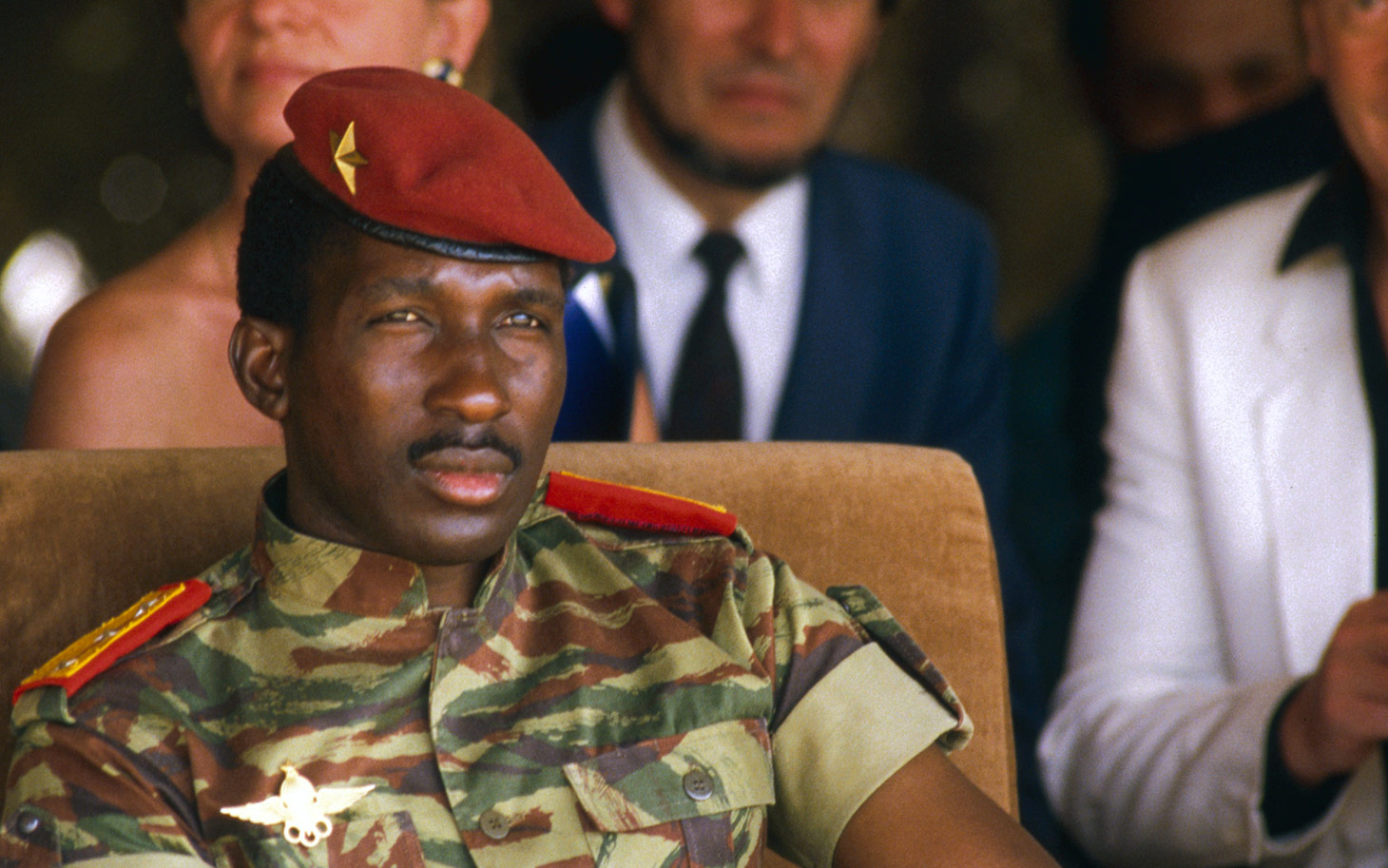
Dubbed Africa’s Che Guevara, Thomas Isidore Noël Sankara was a revolutionist, Marxist and Pan-Africanist.
Sankara served as the President of Burkina Faso from 1983 to 1987 through a military coup led by his friend and ally Blaise Compaore.
Sankara was responsible for renaming his country from Upper Volta to Burkina Faso, formulated foreign policies that concentrated on anti-imperialism, and various initiatives that favoured the advancement of Burkinabes.
On October 15, 1987, Sankara was killed in a coup d’état instigated by Compaore.
5. Patrice Lumumba

Patrice Lumumba was an essayist, writer, Congolese politician and independence leader.
Lumumba fought against the African oppression enacted by the Belgian colonial system. Consequently, he was assassinated on January 2, 1961.