


By Gladys Rwabuhemba
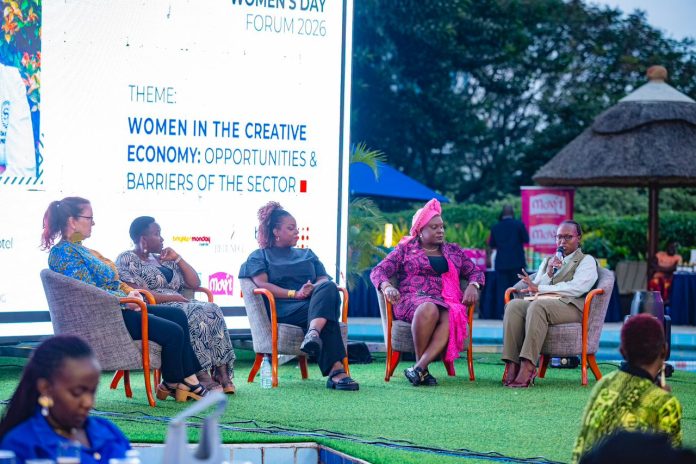
The Ugandan labor market is currently navigating a profound structural transformation. As the nation seeks to industrialize and modernize its economy, a significant demographic shift is occurring within technical and manual trades. Traditionally viewed as male-dominated bastions, sectors such as construction, manufacturing, and electrical installation are seeing an influx of young women driven by the pursuit of financial independence and income security. This shift was recently brought to the forefront by BrighterMonday Uganda at the American Chamber of Commerce (AmCham) Women’s Day Forum, where they presented the landmark report, “Women in Blue-Collar Labour Markets.” This study provides a rigorous, evidence-based assessment of the landscape, analyzing the lived experiences of 1,715 young women and integrating perspectives from 260 key informants to identify the systemic bottlenecks preventing full economic integration.
The Economic Driver: Pragmatism Over Proximity
At the core of women’s entry into blue-collar labor markets is a clear economic rationale. The BrighterMonday research suggests that young women are increasingly viewing technical trades as a more viable path to middle-class stability than traditional service-oriented roles. Technical skills are perceived as highly transferable and directly monetizable, offering a hedge against the volatility of the informal economy. Currently, participation is most concentrated in light manufacturing, which accounts for 36.7% of the female blue-collar workforce, followed by agriculture and agro-processing at 22.4%. Significant strides have also been made in the built environment, with 18.4% of women engaged in construction and finishing, and 12.2% in electrical installation and repair. Despite these numbers, vertical segregation persists. While women are increasingly visible at entry-level and artisanal stages, their representation in supervisory roles and enterprise ownership remains statistically marginal, indicating that while the door to entry has been nudged open, the ceiling for advancement remains firmly intact.
Identifying Structural Barriers
The report highlights that women do not experience the labor market as a neutral playing field. Instead, they navigate a complex web of reinforcing constraints that operate across social, institutional, and economic domains. Foremost among these is the weight of entrenched gender norms and occupational segregation, cited by 28% of study participants. These norms often manifest as skepticism regarding a woman’s physical capability or technical aptitude, leading to discriminatory recruitment practices. Furthermore, 16% of respondents pointed to unequal access to high-quality technical training and apprenticeships. Without formal verification of their skills, such as digital “Skill Badges” championed by initiatives like the Gen-Kazi program, women are often relegated to the most precarious segments of the informal sector.
Beyond the job site, the double burden of unpaid care work remains a significant deterrent to long-term retention. Approximately 14% of women identified time poverty as a primary barrier to their professional growth. In a sector where long hours and physical presence are often mandatory, the lack of care-sensitive workplace arrangements forces many skilled women to exit the workforce prematurely. This is compounded by the fact that 13% of workplaces are described as unsafe or non-inclusive, lacking the basic gender-sensitive Occupational Health and Safety (OHS) standards required to ensure a dignified working environment. These barriers do not act in isolation; rather, they form a “leaky bucket” syndrome where the gains made in recruitment are frequently lost to poor retention.
Lifecycle Vulnerabilities: The Age-Differentiated Experience
A nuanced finding of the BrighterMonday study is that structural barriers are not static; they evolve as a woman moves through different life stages. For the younger cohort, aged 18 to 24, the primary challenges are rooted in the transition from training to employment. These entrants often struggle with a lack of professional networks and the absence of visible female role models in technical leadership. Their vulnerability is primarily one of credibility, where they must constantly prove their worth in environments that assume their incompetence.
Conversely, for women aged 25 to 35, the focus shifts toward stability and scaling. This group faces intense social pressure related to marriage and caregiving, which often conflicts with the demands of technical labor. However, this demographic also exhibits the strongest aspiration for enterprise ownership. Their growth is stymied not by a lack of skill, but by a lack of capital. Access to asset financing, such as grants for industrial equipment or specialized tools, is the missing link that would allow these women to move from being wage earners to becoming job creators and true “Invisible CEOs” of their own enterprises.
Strategic Imperatives for an Inclusive Ecosystem
To transform these insights into actionable economic outcomes, the report advocates for a shift from isolated interventions to ecosystem-level coordination. The evidence suggests that simply increasing the number of women in vocational training is insufficient if the labor market is not prepared to absorb and retain them. Institutionalizing inclusive recruitment practices is a vital first step. This involves working with employers to standardize task allocation and progression systems, ensuring that promotion is based on verified skill rather than gendered assumptions.
Furthermore, there is an urgent need to formalize apprenticeship systems and strengthen the linkages between Technical and Vocational Education and Training (TVET) providers and the private sector. By aligning skills supply with actual employer demand, the transition from classroom to worksite becomes more seamless. On the policy level, strengthening the enforcement of occupational health and safety standards—particularly among small and medium contractors—will create the baseline of security necessary for women to thrive. Finally, expanding financial inclusion to include asset-based lending and incubation pathways will empower the next generation of female industrial leaders.
In conclusion, Uganda’s blue-collar sector represents a frontier for economic transformation. The findings presented at AmCham underscore that women are already a cornerstone of the informal economy. The challenge now lies in rewriting the narrative and restructuring the systems that surround them. By addressing the specific bottlenecks of care work, capital access, and workplace safety, Uganda can unlock a massive reservoir of untapped economic potential, ensuring that the industrialization of the nation is a journey shared by all its citizens.