
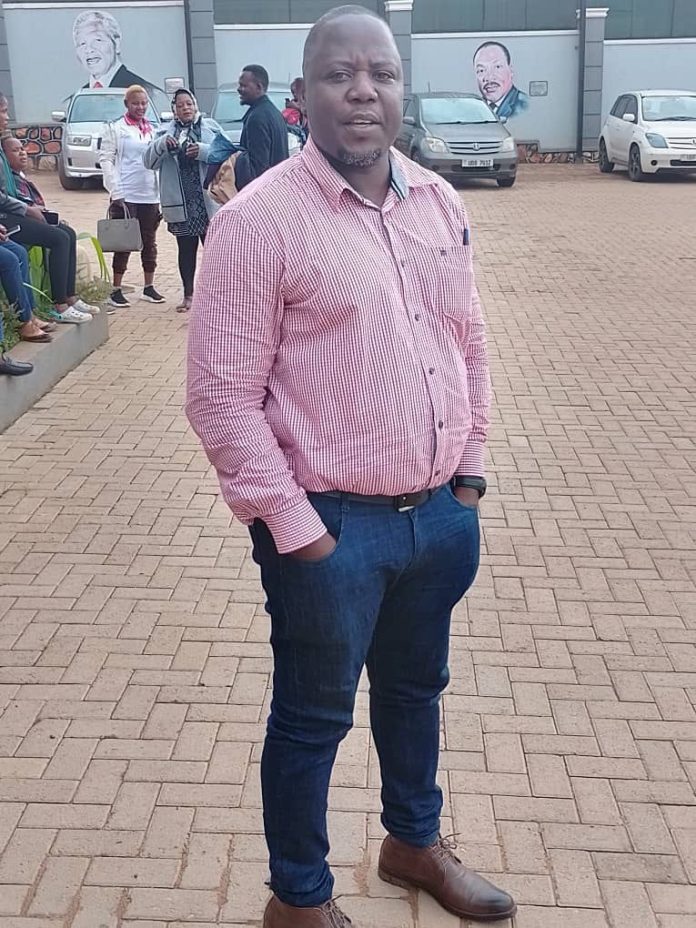

. He organised people, contributed financially, and openly supported the opposition. That visibility, he believes, made him a target.)
When we meet Komakech Geoffrey Ronnie, he is no longer the man he was in 2021.
His voice is slower now. His body still carries the weight of what happened. Some memories come out in fragments. Others, he says, never really left.
“They took me at night,” he begins.
Not arrested. Not summoned. Taken.
At the time, Ronnie was an active mobiliser for the National Unity Platform (NUP). He organised people, contributed financially, and openly supported the opposition. That visibility, he believes, made him a target.
“I was not just a supporter,” he says. “That is why they came for me.”
Taken
“There was no warning,” he recalls. “They surrounded me. Armed.”
He was forced into an unmarked van—a “drone.” Inside, he was immediately blindfolded.
“Then the beating started.”
The vehicle moved for what felt like a long time. He could not tell where they were going. Only that he had disappeared.
Moved in the Dark
“They kept moving me,” he says. “Different places. Safe houses.”
He remembers being taken through areas like Kitintale and later near Acacia Avenue in Kololo, though he cannot be certain.
“There were no charges. No records. You were nowhere.”
Always blindfolded. Always uncertain.
What They Did
At this point, he pauses.
“They tied a stone around my private parts,” he says quietly.
He was forced to sleep in water. Beaten repeatedly. Denied dignity.
“We were many in one room. Men and women.”
He says they were forced to undress in front of their captors.
“The men guarding us were in plain clothes. They spoke Runyankole and Kiswahili. Some were masked.”
Beyond the physical torture, Ronnie says the interrogations often turned into accusations.
“They accused me of supporting foreign ideas,” he says. “They said we were bringing Western influence into Uganda.”
At times, he says, they also hurled accusations related to sexuality—used as a form of humiliation and intimidation.
“They would insult us… call us names… say we were not normal, that we were spoiling the country.”
The words, he says, were meant to break them as much as the beatings.
The Questions
“They wanted names,” he says. “How we mobilised. Who we worked with.”
Sometimes there were questions. Sometimes there was only violence.
“You could hear others screaming,” he recalls. “Some were badly injured.”
Blindfolded for long periods, he lost all sense of time.
“You don’t know whether it is day or night.”
Dumped
One day, it ended as suddenly as it began.
“They removed me and told me to go.”
No explanation. No charge.
Only a warning:
“They told me I would disappear if I continued with NUP.”
He was dumped while extremely weak.
“I could barely move.”
After: A Life Still Under Threat
After his release, Ronnie says the threats did not stop.
Instead, they followed him home.
“My property was attacked,” he says. “People came—some I believed were security, others were known NRM supporters.”
He says parts of his property were destroyed, and he felt deliberately targeted.
When he sought help, he says, the response was silence.
“The police could not help me,” he says. “Or they did not want to.”
Fearing for his safety, he went into hiding.
“I felt like I was still being watched.”
Why Him?
Asked why he believes he was targeted, Ronnie does not hesitate.
“Because of my political beliefs,” he says. “Because I was active.”
And because, he adds, once you are marked—
“They don’t stop.”