
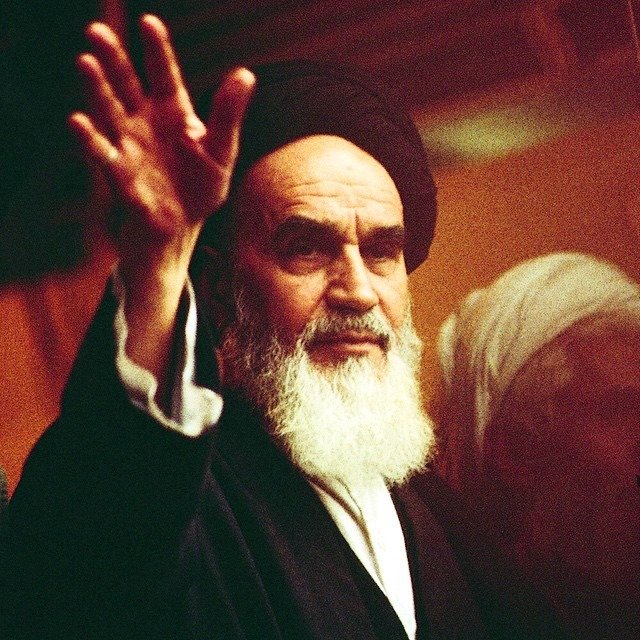



The late Imam Khomeini remains one of the most influential religious and political figures of the 20th century, remembered for leading the Islamic Revolution that transformed Iran from a monarchy into an Islamic Republic in 1979.
Born Ruhollah Musavi Khomeini on September 24, 1902, in the town of Khomein, about 350 kilometres south of Tehran, Imam Khomeini’s life was marked by personal tragedy, rigorous religious scholarship, political resistance, exile, and eventual triumph.
His birth coincided with the anniversary of the birth of Fatima Zahra, the daughter of Prophet Muhammad (peace be upon him), and he was given the name Ruhollah, meaning “Spirit of God.”
Early Life Marked by Loss
Khomeini’s father, Ayatollah Seyyed Mostafa Musavi, was a respected religious leader who had returned from studying at the theological centre of Najaf in Iraq to serve the people of Khomein and surrounding villages.
However, tragedy struck when Ayatollah Mostafa was fatally wounded by bandits while travelling on a road near Arak. Khomeini was only a few months old at the time.
His mother, Hajar, who came from a distinguished family of religious scholars, also died when he was just 15 years old. Despite losing both parents at an early age, Khomeini remained committed to his education and religious studies.
Journey into Religious Scholarship
The young Khomeini began studying Islamic sciences under the guidance of his elder brother, Ayatollah Seyyed Morteza Pasandideh.
He later enrolled at the theological school in Arak, where he studied under the renowned scholar Haj Sheikh Abdulkarim Haeri Yazdi. When leading scholars relocated to the holy city of Qom, Khomeini followed them and intensified his studies.
By 1927, he had completed the highest levels of theological education and was recognised as a mujtahid, a scholar qualified to independently interpret Islamic law.
Beyond jurisprudence, he excelled in philosophy, ethics, mysticism and Islamic theology, earning widespread respect among scholars and students.
Opposition to the Shah
As Iran came under the rule of the Pahlavi monarchy, Khomeini increasingly emerged as a vocal critic of government policies.
During the reign of Reza Shah and later Mohammad Reza Shah, he condemned what he viewed as growing foreign influence, secularisation policies and repression of religious institutions.
His opposition intensified after the death of Grand Ayatollah Hossein Borujerdi in 1961, when many clerics and followers looked to Khomeini for leadership.
From that point, his campaign against the monarchy gathered momentum across the country.
The 1963 Uprising
On June 3, 1963, Khomeini delivered a historic speech denouncing the Shah’s government, accusing it of dependence on foreign powers and criticising its relations with Israel.
The speech triggered a major political crisis.
He was arrested on June 5, sparking widespread demonstrations in Qom, Tehran and several other Iranian cities.
Security forces responded with force, deploying troops and tanks to suppress the protests. Numerous demonstrators were killed.
Although the uprising was crushed, it marked a turning point in Iranian politics and laid the foundation for the Islamic Revolution that would eventually overthrow the monarchy.
Years in Exile
Facing growing pressure from religious leaders and the public, the government exiled Khomeini on November 4, 1964.
He was first sent to Turkey before eventually settling in Najaf, Iraq, one of the most important centres of Shia Islamic scholarship.
While in exile, Khomeini continued to communicate with his supporters through speeches, messages and religious teachings.
His influence continued to grow despite efforts by the Shah’s government to silence him.
The death of his eldest son, Haj Mostafa Khomeini, in 1977 under circumstances widely blamed on the Shah’s security apparatus, further intensified public anger against the regime.
Large mourning gatherings evolved into political protests, fuelling revolutionary sentiment across the country.
As unrest escalated, the Iraqi government, under pressure from Tehran, expelled Khomeini in October 1978.
From France to Revolution
After being denied entry into Kuwait, Khomeini travelled to France, where he settled in the village of Neauphle-le-Château near Paris.
From there, he became the central figure of Iran’s growing revolutionary movement.
Using international media platforms, he issued statements, granted interviews and outlined his vision for an Islamic government founded on justice and religious principles.
Meanwhile, anti-government demonstrations intensified across Iran, weakening the Shah’s grip on power.
Eventually, the Shah left the country in January 1979, paving the way for Khomeini’s return.
Historic Homecoming
On February 1, 1979, after more than 15 years in exile, Khomeini returned to Iran.
Millions of people flooded the streets of Tehran to welcome him, creating one of the largest public receptions in modern history.
Upon arrival, he visited Behesht-e Zahra Cemetery to honour those who had died during the struggle against the monarchy.
Within days, the revolutionary movement gained complete control of the country.
The Pahlavi monarchy collapsed, and an interim government was established.
Subsequently, Iranians voted in a national referendum to establish the Islamic Republic of Iran and approve a new constitution.
The revolution marked the birth of the first modern Islamic state based on Shia Islamic governance.
Leadership of the Islamic Republic
As Supreme Leader of the newly established Islamic Republic, Khomeini guided the country through a decade of political transformation.
His speeches and directives shaped Iran’s domestic and foreign policies, emphasizing independence, Islamic values, social justice and resistance to foreign domination.
Supporters viewed him as a compassionate leader who cared deeply about the poor and oppressed, while critics regarded him as a symbol of religious authoritarianism.
Regardless of differing opinions, his influence on Iran and the wider Muslim world was undeniable.
Death and Legacy
After leading Iran for ten years following the revolution, Imam Khomeini passed away on June 3, 1989.
News of his death plunged the nation into mourning.
Millions of mourners travelled from across Iran to participate in his funeral, making it one of the largest funeral gatherings in modern history.
Similar memorial ceremonies were held in many Muslim countries and among Islamic communities around the world.
More than three decades after his death, Imam Khomeini remains a towering figure whose legacy continues to shape Iran’s politics, religious institutions and international relations.
For supporters, he was the architect of a revolution that restored Islamic governance. For historians, he remains one of the most consequential political and religious leaders of the modern era.